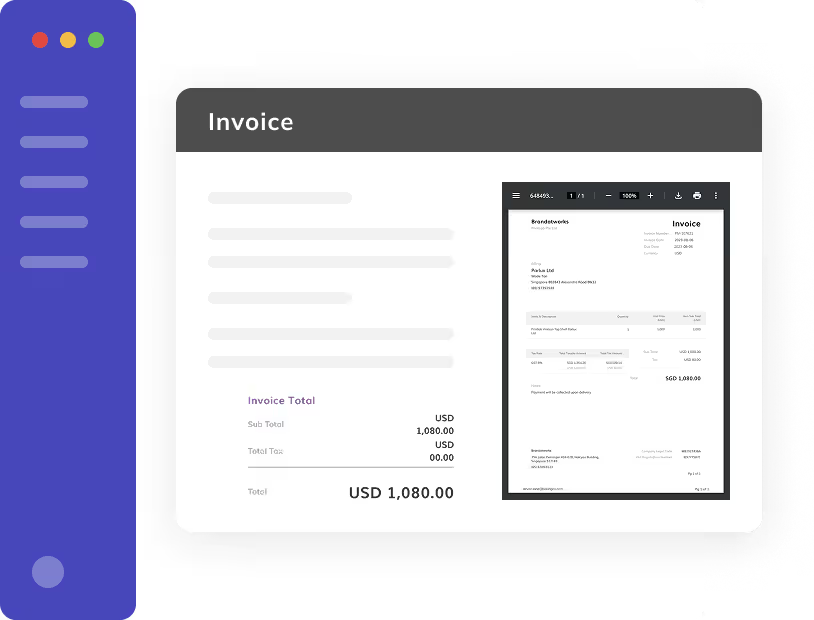
AI in accounting means using powerful software to automate bookkeeping and bank reconciliation, and give valuable insights thanks to advanced analytics.
Learn how accounting firms use AI to improve efficiency and accuracy in their services.
In this article
76% of accounting firms have already jumped on the AI train or are waiting at the station.
AI for accounting firms is growing faster and faster.
Relying on Excel spreadsheets alone in 2026 will only mean that you accounting firm will fall behind and leave clients hungry for a more valuable service.
What is AI in Accounting
AI in accounting refers to the use of software to automate routine process in your accounting firm by analyzing financial data, recognizing patterns, categorizing transactions, and generating insights-
AI accounting systems are able to process large volumes of data quickly, learn from historical behavior, and improve accuracy over time.
In accounting, AI is not a single technology but a combination of several capabilities, including:
Machine learning: Algorithms that learn from historical financial data and improve over time without being explicitly programmed for every scenario
Natural language processing: Allows systems to understand and extract meaning from unstructured data such as invoices, emails, and contracts
Robotic process automation: Automates repetitive, rule-based tasks such as data entry, reconciliation, and report generation
Optical character recognition: Converts scanned documents, receipts, and PDFs into structured, machine-readable data
Accounting workflows include constant manual input an verification, especially during data collection and classification.
These processes are time consuming and, more often than not, prone to (expensive) errors.
AI plays a big part in this type of processes making bank reconciliations or reports much more accurate and fast.
For example, take a multinational accounting firm that receives thousands of invoices in different formats and languages.
AI systems would use OCR to scan documents, NLP to interpret invoice details, and machine learning to categorize expenses correctly across departments and currencies.
The system continuously improves its accuracy as it processes more invoices, reducing the need for manual review over time.
How Has AI Impacted Accounting Firms
AI has changed the operational structure, service delivery, and skill requirements within accounting firms.
Instead of focusing primarily on data entry and compliance, firms are evolving into technology-enabled advisory organizations.
For starters, the role of accountants has shifted from transactional processing to strategic and analytical functions.
When you hand repetitive tasks to your accounting software, you free up time to interpret reports and insights and are able to give your clients advice for future investments and project a more accurate forecast.
There are a few areas in accounting that have been particularly impacted by AI accounting software, such as bookkeeping, multi-currency and multi-company accounting, bank reconciliation, or document management.
In bookkeeping, AI has automated most processes. For example, it is able to extract transaction data from receipts and invoices and automatically categorize expenses and income.
All ledgers can be updated in real time with reduced error due to manual entry.
In multi-currency accounting, AI allows you to apply real-time exchange rates, saving you the time of having to calculate them and update spreadsheets manually with a base currency.
Same thing goes when handling multiple companies, accounting software, such as Eleven, allows instant switching between entities, have consolidated reports, and support intercompany transactions.
Additionally, accounting software will track currency fluctuations and analyze what gains and losses your clients could experience.
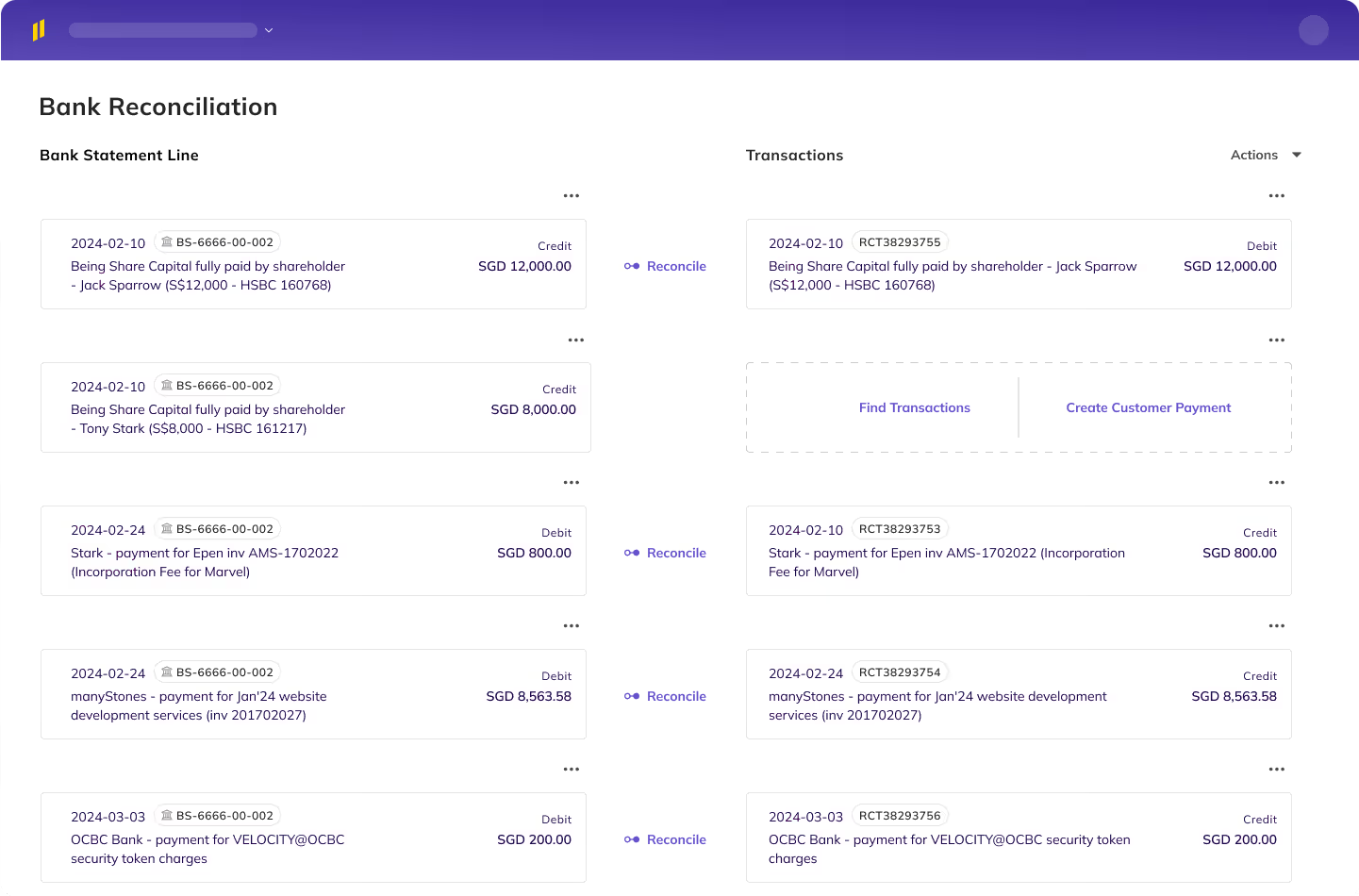
In bank reconciliation, AI automatically matches bank transactions, ledger entries, and payments and receipts.
AI reconciles 85–95% of transactions automatically, only flagging exceptions such as missing entries or discrepancies for human review.
How Can You Use AI in Your Accounting Firm
There are many ways you can use AI in your accounting firm, for example:
Automate routine tasks
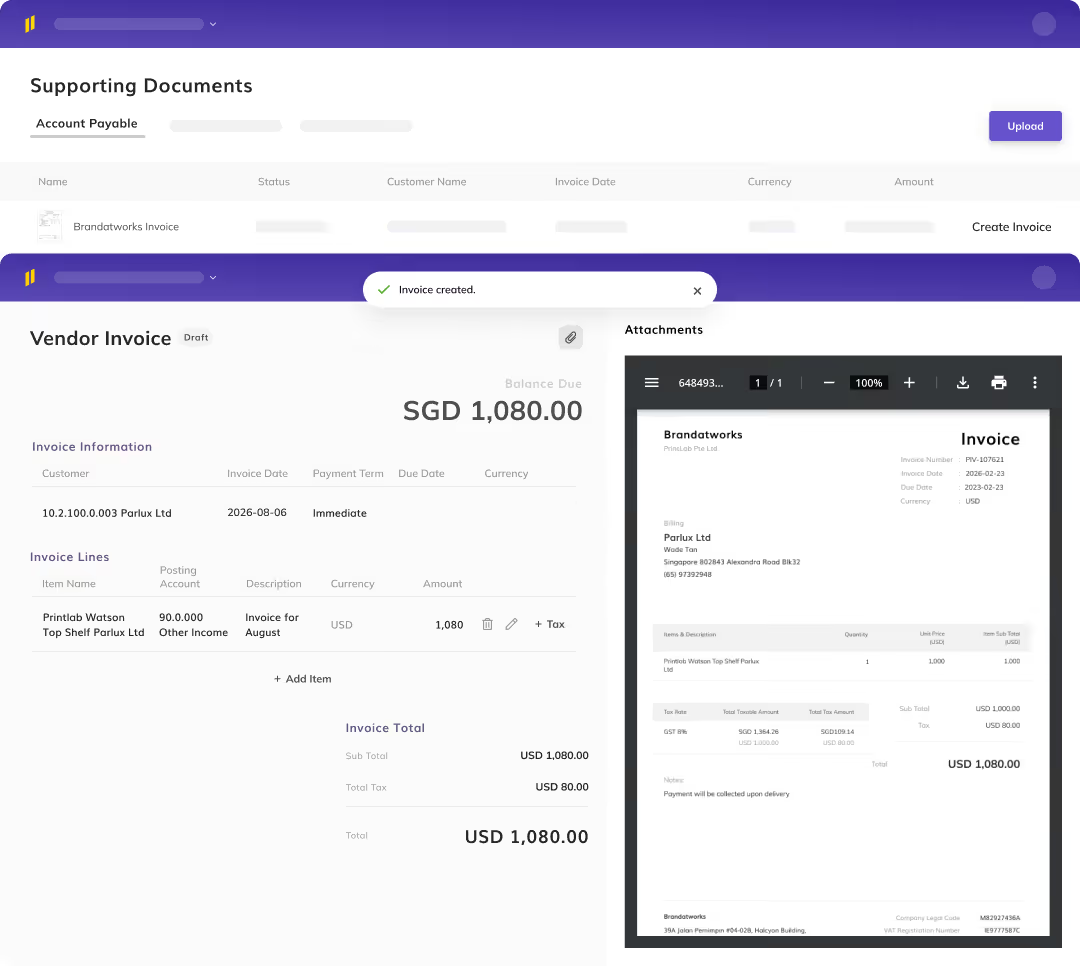
AI accounting software can extract data from all sorts of invoices, receipts, and other documents on their own. Therefore cutting down on time spent and mistakes.
For example, AI systems can scan, interpret documents, and enter information directly into accounting software.
This means you can improve your efficiency by 30-40%.
According to a report by PwC, it is possible to save up to 40% of the time that is normally used in data entry through AI-driven automation.
AI-driven analytics can personalize the advice to be given to the client based on the financial data provided.
It allows your firm to provide recommendations that are specific to each client.
AI can also accurately project forecasts from customized reports to help design strategic planning and risk management.
Using AI, the accounting firm will model different financial scenarios for clients and help them see what might happen under any number of divergent decisions. This ability to predict outcomes is inestimable during strategic planning and risk management and helps the client make more informed choices about their prospects and decisions on their financial future.
For example, with Eleven, you could use BI and ready-to-use widgets to generate custom dashboards and reports completely tailored to your client’s specific scenarios and point out the financies actionably. Some teams also leverage an ai chat interface to instantly query their data and surface insights without building a report from scratch.
Improve Client Experience
Eleven has a fully integrated document management system that allows your firm to use AI to index and store your documents.
Therefore, you can pull up all client records at a moment’s notice without having to sift through endless files and Excel spreadsheets with confusing names.
The document management system is also valuable during tax seasons.
Additionally, with all security measures an AI software has in place (including encryption and role-based access) your clients are confident in the knowledge that their financial data is protected from any accidental leaks.
Prepare and plan clients’ taxes
Storing your documents in a properly indexed document management system, means you can prepare to file taxes quickly.
Thanks to all documents being a hand and using BI for personalized reporting and advanced analytics, you can identify where your client could apply deductions and tax credits.
Eleven can automatically pre-fill VAT and tax returns to help you manage your clients’ taxes easily.
Best AI Accounting Software
The best AI accounting software will help you make your accounting firm much more scalable as you are able to take on more clients and give them a much better service.
Eleven, Sage, and QuickBooks are three favorite tools.
Eleven
⭐⭐⭐⭐⭐ Capterra 4.9/5
Eleven is scalable cloud accounting software designed specifically for accounting firms.
The platform covers all accounting tasks and helps you manage bookkeeping and financial reporting through compliance-based automation.
and is famous for its per-accountant pricing with unlimited entities; scalable and fast GL; extended multi-currency and tax support; multi-company interface; document management; custom reporting and dashboards.
Sage Intacct is on of Sage’s accounting tools. It is a cloud-based accounting software with multi-dimensional reporting, and strong compliance controls.
Intacct offers automated revenue recognition, multi-entity consolidation, project accounting, and dimensional tagging, so it is a suitable choice for companies with layered financial structures.
Its cloud-native architecture allows real-time visibility into financial performance across departments, locations, and business units without relying on manual spreadsheets.
It is typically used to manage complex subscription billing cycles, track multi-entity financials for organizations with subsidiaries, and remain compliant with accounting standards such as ASC 606 and IFRS 15.
Other features include:
Automated bank reconciliation
Financial reporting and dashboards
Invoice and payment automation
Integration with enterprise systems
QuickBooks
QuickBooks is a widely adopted accounting platform that offeres different products such as QuickBooks for Accountants, QuickBooks Online, Intuit QuickBooks, and more.
The platform’s primary purpose is to help SMBs to manage bookkeeping and handle financial records and payments without risking compliance with tax and reporting requirements.
It performs well with basic bookkeeping, invoicing, and has a pretty extensive list of products that integrate well with one another.
Some AI features include:
Accounting AI
Payments AI
Sales Tax AI
Intuit Assist
Bear in mind that AI features are all included starting from the Plus plan.
Choose the Best AI in Accounting
AI in accounting removes manual bottlenecks and allows your firm to work faster, more accurately, and at scale.
AI allows your accounting firm to deliver high value thanks to automated bookkeeping, multi-currency and multi-company accounting, bank reconciliation, and so much more.
Eleven offers automation, multi-company support, advanced reporting, and built-in document management. All in one platform designed specifically for accounting firms.
If you’re ready for your accounting firm to take on an advisory role, start your test drive with Eleven today.
Christina Miranda Porras is a bilingual content writer, translator, and editorial specialist working across English and Spanish. With a background in audiovisual translation and SEO-focused writing, she specializes in research-driven content, editorial clarity, and multilingual communication. At Eleven, she contributes to educational content focused on accounting technology, automation, and business operations, supporting editorial quality and content accessibility.










.avif)