7 Best Accounting Software for CPA Firms in 2026
Last updated:
January 12, 2026 3:47 AM
11
min read


Written by
Noel Bouwmeester
Reviewed by
Noe Saglio
Accounts Receivable Automation: A Guide to Faster Cash Collections
Are your finance teams drowning in manual AR work? Late payments drain your cash, slow growth, and put constant pressure on your team. Accounts receivable automation changes this by helping you get paid faster, eliminate errors, and gain real-time visibility into every outstanding invoice.

If you're still managing receivables through spreadsheets and chasing down late payments manually, this guide is for you. We'll show you how accounts receivable automation works, where AI fits into the process, and how to choose the right solution for your business so you can free up your team and accelerate cash flow.
In this article
Late payments are more than an inconvenience. They slow cash flow, limit growth, and put constant pressure on finance teams.
What if you could reduce manual work, prevent errors, and get paid faster without adding complexity?
That is the promise of accounts receivable automation. It replaces manual receivables processes with structured workflows that help finance teams collect cash sooner, reduce risk, and gain clear visibility into outstanding balances.
This article explains what accounts receivable automation is, how it works, and how to choose the right solution.
What Is Accounts Receivable Automation?
If you're managing invoices through spreadsheets, sending payment reminders manually, and spending hours reconciling payments, you're experiencing the pain that automated accounts receivable solves.
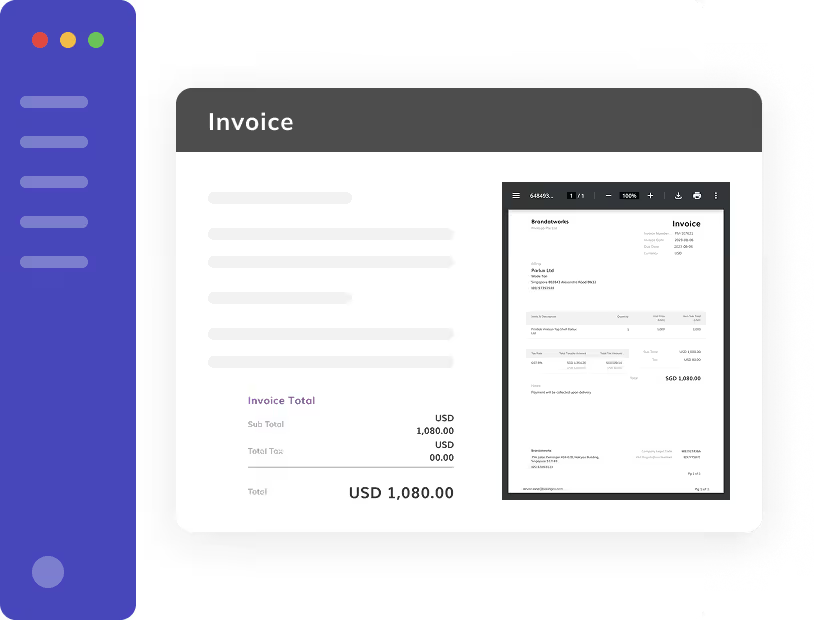
At its core, accounts receivable automation is the use of software to manage and streamline your invoice-to-cash process. Instead of juggling multiple tools and manual tasks, you get a unified system that handles invoice creation, payment tracking, and cash application automatically.
Your team no longer needs to chase down late payments or dig through old emails to figure out which invoice a customer paid against.
Accounts receivable refers to the money your customers owe you after goods or services are delivered on credit, money that appears on your balance sheet as an asset representing future cash inflows.
Without visibility and active management, that future cash becomes uncertain. Invoices get lost, payments come in unmatched, and follow-ups fall through the cracks. Every day an invoice sits unpaid is a day your working capital is tied up.
Accounts receivable automation changes this by replacing spreadsheets and ad hoc follow-ups with a single system that gives your finance team real-time visibility into everything.
The system sends reminders automatically, matches payments without manual intervention, and shows you exactly which invoices are outstanding and when you can expect cash to arrive.
The result is less manual work, fewer errors, and faster payments because nothing falls through the cracks and your customers have a frictionless payment experience.
Why AR Automation Matters Now
Manual accounts receivable processes struggle to keep up with modern finance demands.
Your accounting team is stretched thin, spending disproportionate time on repetitive tasks like data entry, payment matching, and sending reminders. These are necessary but low-value activities that pull your best people away from strategic work.
The business case for automation has never been clearer. When you automate your AR workflows, several things happen immediately:
- Spend less time on grunt work. No more manual data entry or chasing down overdue invoices.
- Improve accuracy because standardized processes and automated matching eliminate human error.
- Get paid faster because nothing slips through the cracks and payment friction disappears.
- Make better decisions because you have real-time data instead of relying on outdated spreadsheets.
But there's a deeper reason why automation matters now.
Cash flow pressure is intensifying as businesses operate with tighter margins and longer payment cycles. If you're not actively optimizing your receivables process, you're leaving money on the table, literally. Every day you can shorten your collection cycle directly improves your cash position and reduces your need for working capital financing.
Key Benefits of Accounts Receivable Automation
The table below summarizes the most important benefits of accounts receivable automation:
Accounts receivable automation improves how quickly businesses get paid. Invoices are sent immediately, and reminders follow a consistent schedule. This reduces delays and improves cash flow predictability.
Automation also helps lower Days Sales Outstanding. When payments are easier to track and overdue balances are visible in real time, finance teams can act sooner. Faster collections free up working capital and reduce pressure on cash reserves.
Accuracy improves as well. Manual data entry often leads to errors like duplicate invoices or incorrect amounts. Automated systems use standardized workflows and payment matching, which reduces mistakes and billing disputes.
Another major benefit is efficiency. Repetitive tasks such as data entry, follow ups, and reconciliation are handled automatically. This saves time and lowers administrative costs, especially as invoice volumes grow.
The customer experience benefits too. Clear invoices, timely reminders, and convenient payment options make it easier for customers to pay on time. This reduces friction and supports stronger long term relationships.
Automation also improves visibility. Finance teams gain real time access to aging reports, DSO, and cash flow forecasts. Decisions are based on current data rather than outdated spreadsheets.
Finally, accounts receivable automation supports growth. As transaction volumes increase, automated systems scale without requiring large increases in staff. This makes AR more sustainable as the business expands.
Can AI Do Accounts Receivable?
Yes. AI is increasingly embedded into AR automation. Modern systems use artificial intelligence to:
- Predict late payments based on customer risk profiles.
- Spot anomalies such as possible accounts receivable fraud or data mismatches.
- Automate complex matching of remittances to invoices.
- Optimize communication by selecting the best follow-up method per customer.
AI doesn’t replace human judgment. Instead, it enhances AR automation by making processes smarter, more predictive, and more scalable.
Key Features of Accounts Receivable Automation Software
Accounts receivable automation software is designed to streamline how invoices are created, sent, tracked, and paid. It brings the receivables process into one structured system instead of relying on disconnected tools.
At a high level, these platforms typically help teams to create and send invoices automatically, track payments and overdue balances in real time, and reduce manual reconciliation and follow ups
The features below make this possible and form the foundation of most accounts receivable automation solutions:
- Automated reminders and notifications: Systems send emails, messages, or portal alerts before and after due dates. Communication can be adjusted based on customer behavior or payment history to improve response rates.
- Integrated payment options: Many platforms allow customers to pay directly from the invoice using ACH transfers, credit cards, or online payment portals. Reducing friction in the payment process often leads to faster payments.
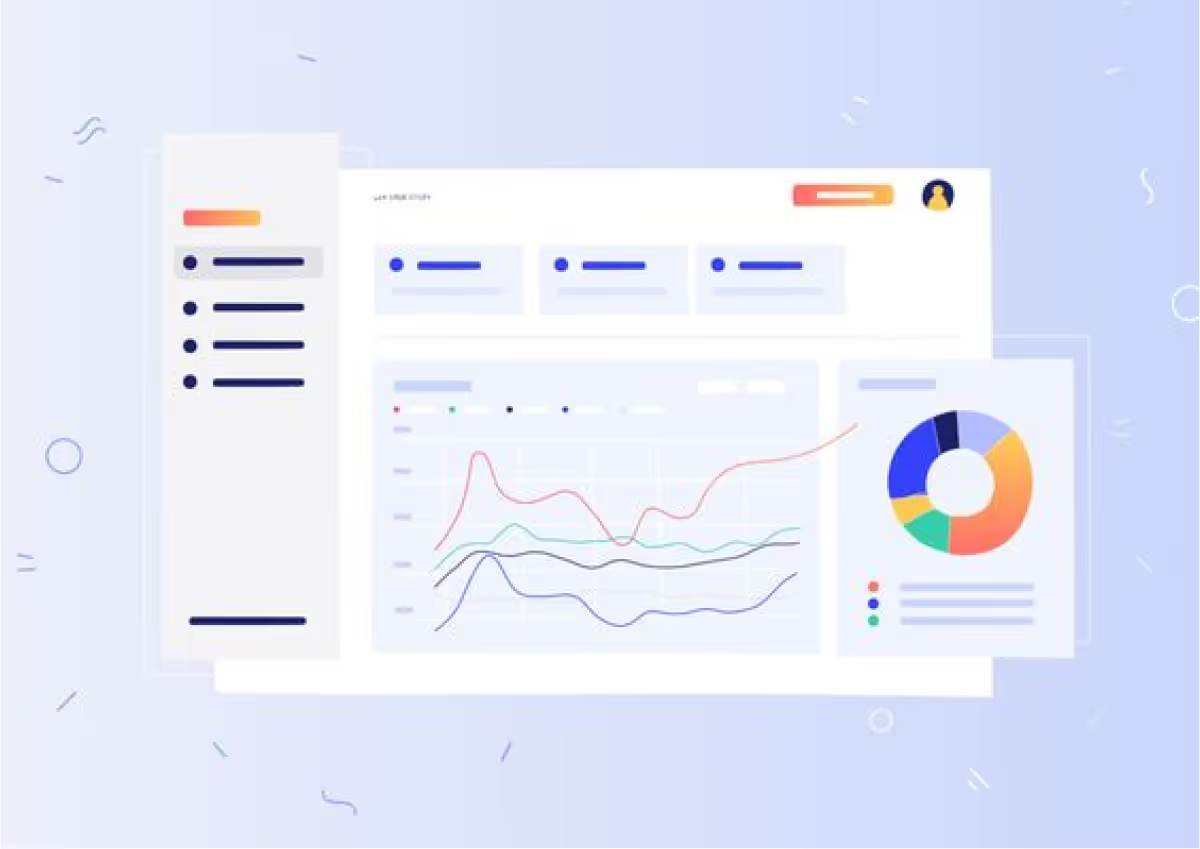
- Real time analytics and dashboards: Dashboards provide visibility into aging reports, collection trends, and cash flow forecasts. Finance teams no longer need to rely on static spreadsheets.
- Accounting and ERP integration: Accounts receivable automation software should connect directly with accounting or ERP systems. This keeps financial data accurate and synchronized.
- Automated cash application: Incoming payments are matched to open invoices automatically, even when remittance details are incomplete. This reduces reconciliation time and improves accuracy.
Accounts Receivable Automation Software Solutions
Here’s an overview of notable solutions:
1. Eleven
Eleven streamlines the entire receivable process with integration to your accounting backbone, automated invoice delivery, reminders, and customizable workflows suited to your billing cadence.
Offering real-time views of outstanding payments, Eleven gives finance teams visibility and control while improving cash flow predictability.
2. Bill.com
Bill.com automates invoicing, payment reminders, and synchronization with popular accounting tools. It helps businesses send invoices, track statuses, and collect payments faster. Bill.com is particularly strong for small to mid-market businesses looking for an all-in-one solution that handles both payables and receivables.
3. Upflow
Upflow's AR solution offers automated workflows, analytics, and real-time dashboards that help reduce DSOs and expedite collections. Upflow is built specifically for AR automation, making it a strong choice if receivables management is your primary focus and you want specialized features like AI-driven collection strategies.
4. Other Tools
Other notable platforms include NetSuite, SAP, Oracle, and smaller specialist AR automation vendors, each with strengths in integration, analytics, or AI-driven features.
Enterprise-level businesses often choose these broader ERP solutions when AR automation needs to integrate seamlessly with other financial operations.
Smaller vendors typically offer more agility and lower costs for companies with specific, targeted AR needs.
Best Practices for Implementing AR Automation
Selecting the right accounts receivable automation solution is only your first step.
To maximize returns and successfully automate accounting processes across your receivables operation, you need a thoughtful implementation strategy.
The following practices help finance teams deploy AR automation effectively, minimize disruption, and start seeing cash flow improvements quickly.
1. Start with Clear Invoice Terms
Before automating, ensure your invoicing foundation is solid. Clearly documented payment terms, including due dates, late fees, and accepted payment methods, reduce confusion and set expectations upfront.
When terms are standardized, your automation system can enforce them consistently across all customers. Without clear terms, even the best automation system will struggle to collect on time. Take time to review and document your current terms, then ensure they're reflected in your AR automation platform before going live.
2. Integrate with Accounting/ERP
Your AR automation system is only as effective as its connection to your core financial systems. Ensure your chosen platform ties directly to your accounting software or ERP.
This integration keeps customer data, invoice records, and payment information synchronized in real time. Without proper integration, you'll end up with duplicate data entry, reconciliation headaches, and gaps in visibility. When selecting a solution, prioritize platforms that offer native integrations with your existing systems,or plan for custom APIs if needed.
3. Use Data to Drive Rules
Manual follow-up decisions are inconsistent and time-consuming. Instead, use customer data to set up smart automation rules.
Analyze payment history, customer size, and industry to create segmented reminder schedules. For example, a key account that always pays on time might get a single reminder, while a customer with a history of late payments could receive multiple touchpoints and faster escalation.
This data-driven approach improves collection rates while avoiding over-communication that damages customer relationships.
4. Monitor Key Metrics
Implementation success depends on measurement. Establish a baseline before automation goes live, then track these critical metrics:
- Days Sales Outstanding (DSO): The average time it takes to collect payment. AR automation typically reduces DSO by 10-20%.
- Aging buckets: Monitor invoices 30, 60, and 90+ days overdue to identify problem areas.
- Collection rates: What percentage of invoices are collected on time?
- Exception rates: How many invoices require manual intervention?
Review these metrics monthly in your first 90 days, then quarterly thereafter. This data helps you fine-tune rules and identify where additional customer outreach or process changes are needed.
5. Reevaluate Regularly
Your business, customer base, and payment patterns change.
As your company evolves, update your AR automation workflows and thresholds to stay aligned with changing customer payment trends. Seasonal businesses may need different reminder cadences at different times of year.
Growing companies may need to adjust credit limits or payment terms. Annual reviews of your automation rules ensure your system remains effective as conditions shift.
Conclusion: Automation Is No Longer Optional
Accounts receivable automation is no longer a nice to have.
It is essential for businesses that want efficient finance operations, stronger cash flow, and better visibility.
By reducing manual work, minimizing errors, and shortening DSO, AR automation gives finance teams room to focus on higher value work. It also creates a more predictable and scalable receivables process.
If you are still managing receivables through spreadsheets and manual follow ups, automation represents a fundamental shift. When receivables are integrated directly into your accounting system, cash flow becomes easier to manage and easier to forecast.
If your organization handles complex receivables, multiple entities, or multi currency transactions, Eleven can help.
You can see how Eleven supports accounts receivable automation by signing up for a free trial.
Guides
✔

Noel Bouwmeester
Noel Bouwmeester is an SEO content strategist and B2B SaaS writer focused on organic growth, search visibility, and AI-era content discovery. He has contributed to SEO and content marketing initiatives for companies including lempire and lemlist, helping support large-scale organic traffic growth through search-focused content strategies. At Eleven, he contributes educational SEO content focused on accounting technology, automation, and AI-driven business workflows.

.avif)