ERP vs Accounting Software: How to Choose the Right Tool for Your Business
Understand the key differences between ERP and accounting software, and learn which one fits your business needs based on size, complexity, and growth stage.
As your business grows, so do your operational demands. This article helps you evaluate whether you need a focused accounting solution or a broader system that connects finance with the rest of your business.
In this article
As a business grows, picking the right financial system becomes a key decision, especially when it comes to ERP vs accounting software.
Accounting software is useful for managing numbers in the beginning. But as a company grows, keeping finances separate from other areas can lead to inefficiencies.
The global ERP software market reached $77.08 billion in 2025, and is projected to reach $157.07 billion by 2033. This growth shows that many organizations are choosing integrated systems over standalone financial tools.
So, what makes ERP different from accounting software, and how can you decide which is right for your business now?
What Is Accounting Software?
Accounting software is designed to manage financial data. It automates key finance tasks and removes the need for manual ledgers or spreadsheets.
It is made for finance teams and gives them one place to track money coming in and going out.
The visibility is detailed but limited, since it only covers finances and does not connect with other departments.
This makes accounting software a good choice for small businesses and startups, especially when the finance team operates independently and operations remain simple. When payroll complexity grows, a dedicated solution like RemotePass Local Payroll bridges the gap.
What Is ERP Software?
ERP, short for Enterprise Resource Planning software, is a comprehensive system that integrates various business functions into a single platform.
Finance is just one part of what it covers. An ERP typically integrates:
Financial management
Inventory and supply chain
Human resources and payroll
Customer relationship management (CRM)
Procurement
Manufacturing and production (for relevant industries)
Since all these functions are in one system, data moves between departments without extra steps.
The sales team can check inventory levels, finance can access procurement data instantly, and HR and payroll stay updated automatically.
This connected view is what makes ERP different from accounting tools.
ERP vs Accounting Software: Side-by-Side Comparison
What Are The Differences between ERP And Accounting Software
When deciding between ERP and accounting software, it’s important to think about how your business runs now and how you want it to grow.
Both types of software manage financial data, but they differ significantly in what they offer, how flexible they are, and how they affect your business over time.
Knowing these differences can help you choose the system that fits your needs today and supports your plans for the future.
Scope of Functionality
Accounting software is made specifically for finance. It gives your accounting team what they need without affecting other parts of the business.
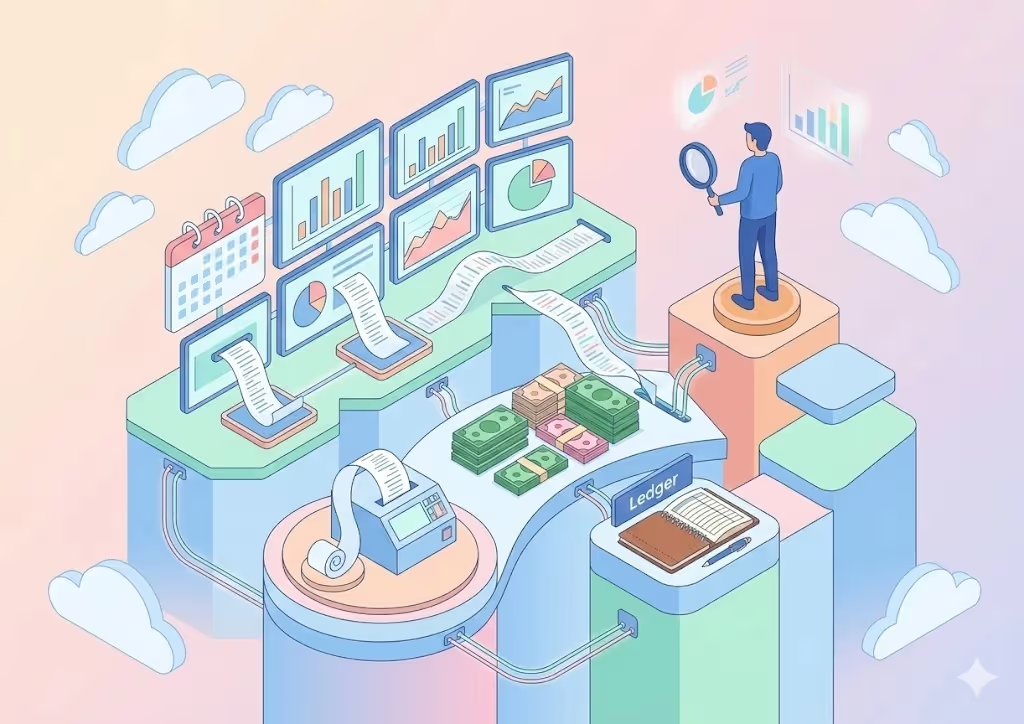
ERP covers all business operations. It tracks financial transactions, inventory changes, customer interactions, employee information, and procurement activities in one system.
This difference in scope is the main thing to consider. If your business has several departments that rely on each other's data, accounting software can create silos, while ERP helps remove them.
Integration Depth
Accounting software can link to other tools using integrations or APIs, but these are extra features. They need upkeep and may stop working when platforms change.
ERP modules are connected by default. When you enter data in one area, it updates everywhere in the system, which helps avoid double entry and mistakes from disconnected tools.
Scalability
Accounting software works well for normal transaction volumes. But as your business grows with more locations, products, or employees, the software might have trouble keeping up.
ERP is designed to grow with your business. You can add new modules as needed, and the system can handle more data without slowing down.
Accounting software is easy to get started with. Many platforms have subscription plans that begin at a few hundred dollars per month, and setup usually takes just days or a few weeks.
ERP is a larger investment. The average ERP implementation cost is $450,000, with timelines varying widely based on scope, vendor, and organizational complexity.
It's important to know about these costs and timelines before you decide.
When To Choose Accounting Software
Not every business needs ERP. Accounting software makes sense when:
Your operations are simple
If your business does not need inventory management, complex supply chains, or cross-department data sharing, accounting software covers your needs without added complexity.
Your team is small
A company with five people does not need a system built for 500. Accounting software is easier to use and better suited for small teams.
Your budget is tight
ERP setup can cost six figures before you even start using it. If that investment does not match your current size or revenue, a good accounting tool is the smarter choice.
You are in the early stages
Young companies need to move fast. Accounting software is quicker to set up and helps finance teams focus on essentials without the overhead of a full ERP rollout.
When To Choose ERP
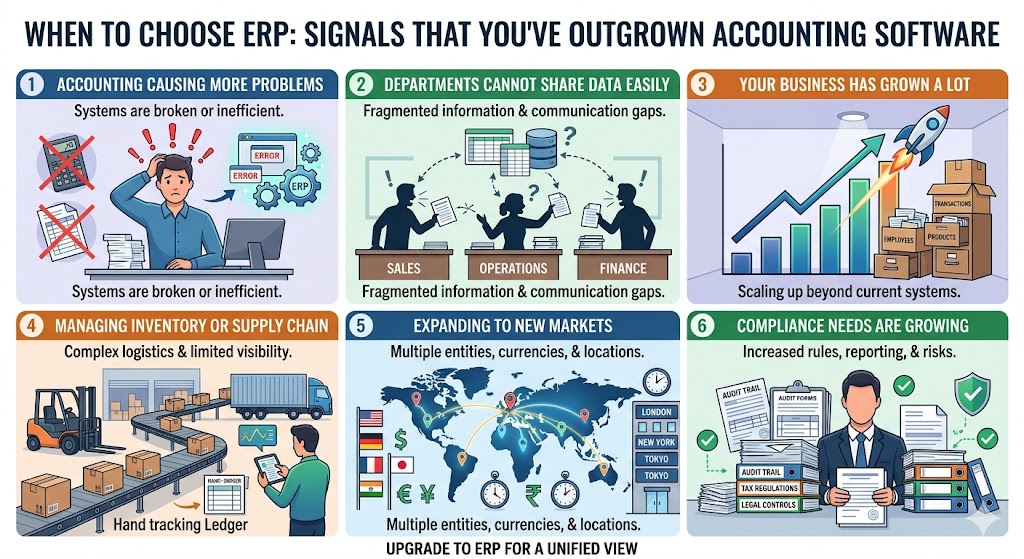
ERP is the right choice when accounting software starts causing more problems than it solves.
Your departments cannot share data easily. If sales, operations, and finance are always updating spreadsheets or asking each other for new numbers, your systems are not integrated enough.
You have grown a lot. Fast growth often shows where standalone tools fall short. More transactions, employees, and products can overwhelm accounting software, which may only handle finances and leave other areas unmanaged.
You manage inventory or supply chain. Accounting software has limited or no built-in features for tracking inventory and managing procurement. ERP handles these tasks directly.
You are expanding to new markets or locations. ERP includes features like managing multiple entities, supporting different currencies, and reporting across locations. Doing this with accounting software usually means using several separate tools.
Compliance needs are growing. As your business grows, so do the rules you must follow. ERP systems help with audit trails, financial controls, and compliance documents across all departments.
Can Accounting Software and ERP Work Together?
Sometimes, yes. Many organizations use ERP systems with accounting software built in, instead of as a separate product. Accounting software can also be a starting point before moving to a full ERP system.
Some businesses use accounting software together with ERP systems for operations, connecting them with an API to sync financial data. This setup works, but it adds maintenance work and can lead to data problems over time.
For most growing businesses, the simpler solution is to switch to an ERP that has financial management built in. This removes the need for a separate accounting tool.
Making the Right Call for Your Business
Choosing between ERP and accounting software ultimately comes down to scope. Before making a decision, ask yourself the following questions:
“How many people need access to shared data?”“How many processes depend on each other?”“How much complexity are you managing today?”“How much more are you expecting in the next two years?”
Answering these questions honestly will help you more than any feature comparison. The businesses that make the right choice are the ones that look at their real workflows, not just their wish list.
If you are still unsure, start by checking where your data breaks down. That is usually where you will find your answer.
Still Running Your Firm on Generic Software?
If your practice manages multiple client entities, accounting software made for small businesses will only get you so far.
Eleven is designed for accounting firms that need multi-entity management, audit-ready reporting, and automated workflows without the complexity of ERP.
Book a personalized demo to see how firms managing 10 to over 500 client entities are saving up to 40 hours per accountant each month.
Camelia Khadraoui is a content writer, illustrator, and former journalist specializing in educational content, visual storytelling, and digital communication. She has contributed to projects for organizations including UNDP and TE Connectivity. At Eleven, she helps create accessible content and visual materials focused on accounting technology, automation, and AI-powered business workflows.



.jpg)


.avif)