What Is Accounting Software: Types, Features and Benefits
A practical guide to accounting software types, features, and how to choose the right platform for your business size and needs.
Accounting software has moved well beyond basic bookkeeping. This article breaks down the main categories, covers the features that matter most, and walks through what to look for before committing to a platform.
In this article
Most businesses hit a point where spreadsheets stop working. Transactions multiply, reporting gets complicated, and manual processes start producing errors that cost real money.
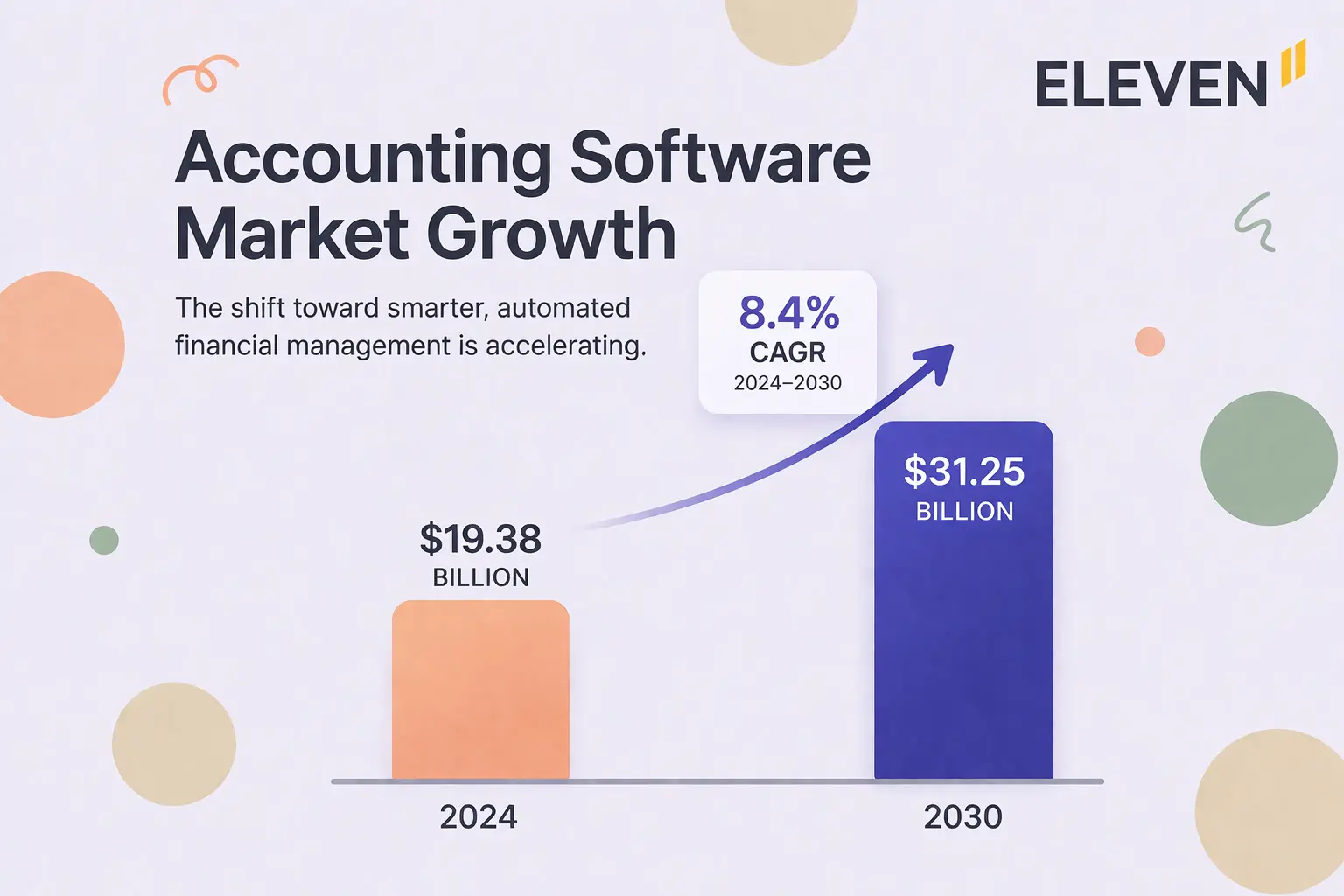
The shift is clear: businesses are moving toward smarter, automated financial management. And it’s smart not to stay behind.
What Is Accounting Software?
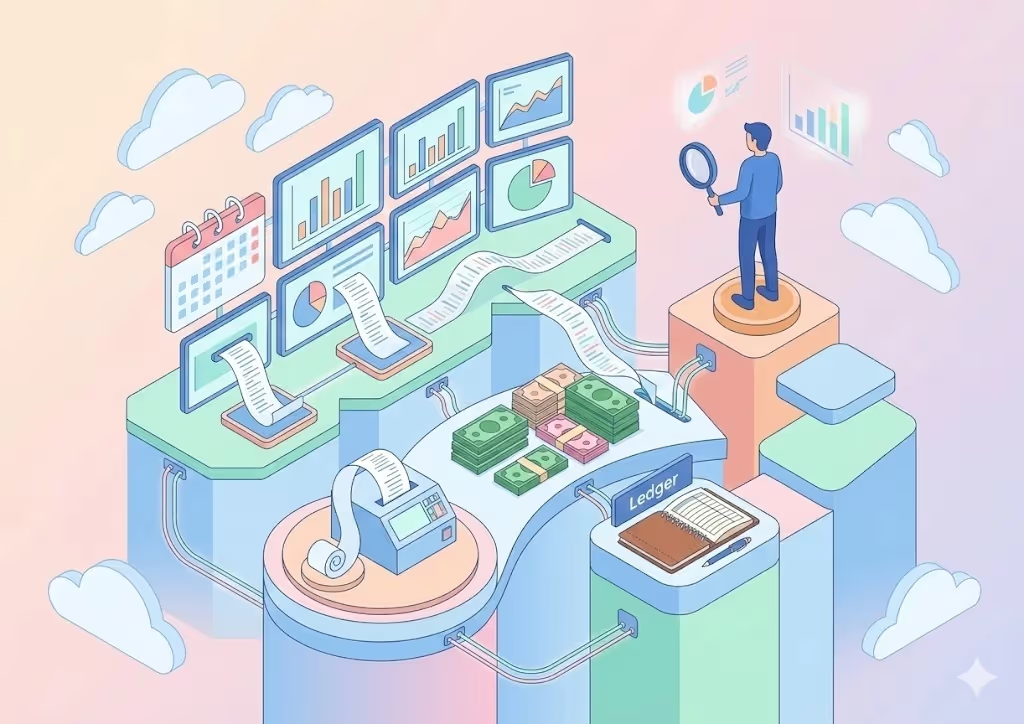
Accounting software is a digital tool that helps record, manage, and report a company's financial transactions. It takes over manual bookkeeping by automatically handling tasks such as invoicing, tracking expenses, reconciling bank accounts, and generating financial reports.
Basic platforms mainly track income and expenses. More advanced systems connect with payroll, tax tools, procurement platforms, and ERP systems, so finance teams get a complete view of the whole business.
Most modern accounting software is cloud-based, so financial data is accessible in real time from any device with an internet connection.
What Are the Types of Accounting Software?
There isn't a single accounting software that fits every business. Different options are designed for different business sizes, industries, and financial needs.
Small Business Accounting Software
These platforms are designed to be simple and affordable. They usually handle invoicing, expense tracking, bank feeds, and basic reports. Popular examples include QuickBooks, FreshBooks, and Xero. Subscription pricing means no large upfront cost.
They work well for freelancers, startups, and small businesses that don't need complex reporting or automated compliance features.
Enterprise Accounting Software
Enterprise-level solutions manage complex financial operations across departments, subsidiaries, or locations. Examples include Oracle NetSuite, SAP, and Microsoft Dynamics.
These systems offer advanced features such as multi-currency support, consolidated financial reports, audit controls, and integration with procurement and supply chain tools.
Cloud-Based vs. On-Premises Software
Feature
Cloud-based
On-premises
Accessibility
Anywhere, any device
Local network only
Upfront cost
Low (subscription)
High (licenses + hardware)
Maintenance
Managed by vendor
Managed internally
Customization
Limited to moderate
High
Data control
Vendor-hosted
Fully in-house
Best for
SMEs, remote teams
Large enterprises with strict data policies
Cloud-based (SaaS) accounting software is expected to make up 61.9% of the market in 2025, according to Future Market Insights. Many businesses prefer flexible solutions that require less of their own IT infrastructure.
Note: Cloud-based software is the default choice for most small and mid-sized businesses today. On-premises only makes sense if your organization has strict data sovereignty requirements or already has the IT infrastructure to support it.
Specialized Accounting Software
Some accounting software is built for specific industries or tasks. Construction companies use tools like Foundation or Sage 100 Contractor for job costing and project billing. Nonprofits use software focused on fund accounting, while healthcare organizations need platforms that fit medical billing processes.
Payroll software and tax compliance tools also fall into this category. They can work independently or as modules within a larger accounting system.
Who Should Use Accounting Software?
Accounting software is useful for many types and sizes of businesses. The details change depending on the company, but the core need is consistent: accurate financial records and efficient reporting.
Profile
Why They Need It
Freelancers and sole traders
Invoice clients, track expenses, prepare for tax season
Manage multiple client accounts from a single interface
Nonprofits and government
Fund accounting, compliance reporting, grant tracking
Any organization that deals with regular financial transactions, has regulatory obligations, or needs to produce reports will benefit from dedicated software over spreadsheets or manual methods.
📎 Signs you might need accounting software:
Your bookkeeping lives in a spreadsheet that only one person understands
You've missed a tax deadline or filed with errors
Month-end closing takes more than a few days
You don't know your cash position without digging through files</aside>
What Are the Features of Accounting Software?
Invoicing and Billing
Accounting software creates professional invoices, automates recurring billing, and tracks payments as they come in. This reduces manual work and keeps accounts receivable organized without spreadsheet maintenance.
Expense Tracking
Expense tracking tools record spending across the business, automatically categorize transactions, and flag anything unusual. Employees can upload receipts digitally, which feed straight into the accounting records without extra data entry.
Financial Reporting
Standard financial reports, income statements, balance sheets, and cash flow statements, are generated automatically from live transaction data. There's no need to gather numbers from separate sources by hand.
Payroll Management
Payroll management made up 29.10% of the accounting software market in 2025 and is growing at 10.40% per year through 2031. Payroll features automate salary calculations, tax withholdings, benefits deductions, and pay stub generation.
Tax Management
Tax management features calculate applicable rates, produce filing-ready reports, and maintain audit trails. For businesses operating across multiple regions, this includes handling different VAT structures, e-invoicing mandates, and local compliance requirements.
Integration with Other Tools
Accounting software connects with CRM systems, procurement tools, payment processors, inventory systems, and bank feeds. These integrations keep data consistent and remove the need to transfer information between systems manually.
What Are the Benefits of Using Accounting Software?
When picking accounting software, think about what will really help your business over time, not just the features. Here are some important things to keep in mind before you decide:
Improved Accuracy
Entering data by hand introduces risk at every step. A wrong number, a missed entry, or a duplicate row can distort financial reports and lead to poor decisions. Accounting software reduces these risks by automating data capture, keeping formats consistent, and flagging errors early.
Bank feeds pull transactions directly from financial institutions, removing one of the most common sources of mistakes entirely.
Time Savings Through Automation
Tasks like recurring invoices, payroll runs, tax calculations, and monthly closings take significant time when done manually. 52% of AP professionals now spend fewer than ten hours per week processing invoices, compared to 62% the year before, a measurable shift driven largely by automation.
When finance staff are freed from repetitive processing, they can focus on analysis and planning instead.
Better Financial Visibility
Cloud-based platforms update financial data as transactions occur. Business owners and finance leaders can check cash flow, unpaid invoices, or budget variances at any point during the month, rather than waiting for end-of-period reports.
Compliance and Tax Readiness
Staying compliant with tax laws and financial regulations requires accurate records and timely reporting. Accounting software maintains audit-ready records, applies the correct tax rates automatically, and generates the documentation regulators require.
This is particularly useful for businesses operating across multiple regions with different tax frameworks or reporting obligations.
Scalability for Growing Businesses
As businesses expand, their finances get more complicated. A good accounting platform grows with the business by allowing more users, entities, currencies, or modules to be added without replacing the whole system.
Small and medium-sized businesses are adopting accounting software at a 10.85% annual growth rate, largely because cloud features and AI-powered data capture reduce the need for dedicated IT staff.
How to Choose the Right Accounting Software
When evaluating accounting software, it's worth looking beyond the feature list and thinking about what will actually work for your business long term.
Start with what your business actually needs
Begin by listing the financial tasks your team handles every day, how many invoices you process, how complex your payroll is, what reports you need, and any compliance obligations specific to your industry or region.
Understand the real cost, not just the price tag
Cloud platforms usually charge a monthly or yearly subscription based on users or features. Factor in setup time, training, and integration work when comparing total cost, not just the headline subscription price.
Choose a tool your team will enjoy using
If a platform is too technical, it slows your team down. Look for a clean interface, logical workflows, and documentation that works for non-technical users.
Note: Most vendors offer free trials or demo environments. Before committing, use the platform to complete a real task, like creating an invoice or generating a report, rather than just clicking through the interface. That's where friction usually shows up.
Make sure your financial data stays safe
Check whether the platform uses encryption for stored and transmitted data, supports multi-factor authentication, and offers clear access controls by user role. For cloud platforms, also review data residency policies and uptime guarantees.
Don't overlook the importance of good support
When something goes wrong with financial software, response time matters. Check whether the vendor offers live support during business hours, a solid help center, and onboarding assistance. Reviews on G2 or Capterra give a more realistic picture of post-sale support than marketing pages do.
Is Accounting Software Worth the Investment?
For most businesses, the answer is straightforward. Manual financial processes don't scale, and the risk of errors compounds as transaction volume grows.
Accounting software reduces that risk, saves time, and gives finance teams the visibility they need to operate with confidence.
The category continues to evolve quickly, with AI automation, embedded payments, and deeper integrations reshaping what these platforms can do.
Understanding the types available and matching them to your actual business needs is the starting point for getting real value from the investment.
Try Eleven Free - No Credit Card Required
If you manage multiple client entities and you're ready to move beyond spreadsheets or generic SMB tools, Eleven is built specifically for accounting firms handling 10 to 500+ clients.
You get full access to all features from day one: AI-powered data capture, multi-currency support, multi-entity management, and audit-ready reporting.
Eleven even provides a pre-configured test environment so you can explore without needing to migrate your own data first (though you can bring one or two client entities if you prefer to test with real numbers).
Camelia Khadraoui is a content writer, illustrator, and former journalist specializing in educational content, visual storytelling, and digital communication. She has contributed to projects for organizations including UNDP and TE Connectivity. At Eleven, she helps create accessible content and visual materials focused on accounting technology, automation, and AI-powered business workflows.




.avif)