


.avif)
Choosing Between Cloud & Desktop Accounting Software in 2023
Planning to revamp your accounting firm's tech stack? Let's compare cloud vs desktop solutions, so you can choose the best tool and upgrade your practice.


Xero vs Sage Intacct (2026): an SMB platform vs a mid-market financial system. Full comparison of features, pricing, and which one fits your firm's complexity.
Xero and Sage Intacct serve different markets. This guide compares both platforms on features, pricing, and architectural fit and maps exactly when each one is the right choice.
In this article
The Xero vs Sage Intacct comparison comes up at a specific point: a firm is managing multiple entities, producing consolidated financials for external stakeholders, or operating in a regulated vertical that needs more than Xero was built to handle.
These aren’t the same use case, and the platforms weren’t built for the same audience.
This article maps exactly where the two platforms differ, where that difference becomes a decision, and where both of them leave a gap that neither fills.
Xero is a best-in-class single-entity accounting platform. It’s clean, accessible, and genuinely strong for SMBs and accountant-managed businesses with up to one entity per subscription.
Sage Intacct is a mid-market financial management system for complex internal finance teams: multiple subsidiaries, regulated verticals, and sophisticated revenue recognition requirements.
For outsourced accounting firms managing portfolios of external client entities, neither platform was designed for that operating environment.
The final section of this article covers what a purpose-built alternative looks like.
Before the details, here’s how the platforms compare on the dimensions that matter most for a serious evaluation.
Xero is a cloud accounting platform for growing single-entity businesses that want accessibility, unlimited users, and a strong international footprint. It’s particularly strong outside the US, with mature bank feed coverage in the UK, Australia, New Zealand, and Europe.
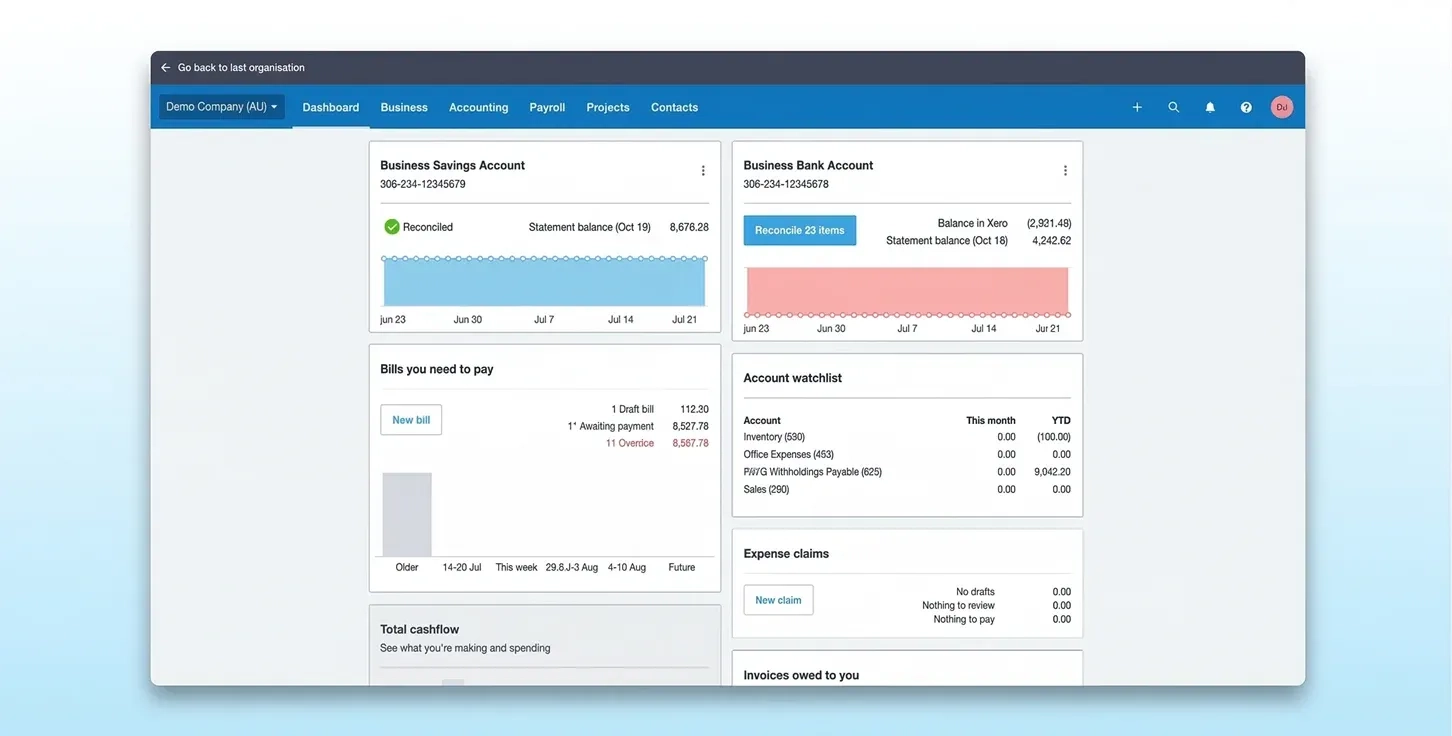
Its strengths are a genuinely clean interface, unlimited users on every plan from $29/mo., and an extensive App Store ecosystem. It’s the platform most often recommended by accountants to clients who want something more capable than entry-level bookkeeping software without the complexity of mid-market tools.
⚠️ Watch Out: Xero has a clearly defined ceiling. Each organization is an isolated subscription with no native multi-entity consolidation, no intercompany automation, and only two tracking categories for segmented reporting. These are architectural constraints, not plan-level limitations that a higher tier resolves.
Sage Intacct is a cloud-based financial management system built for mid-market organizations with complex accounting needs. It’s not a small business accounting tool. The implementation is heavier, the pricing is significantly higher, and the feature depth is correspondingly greater.
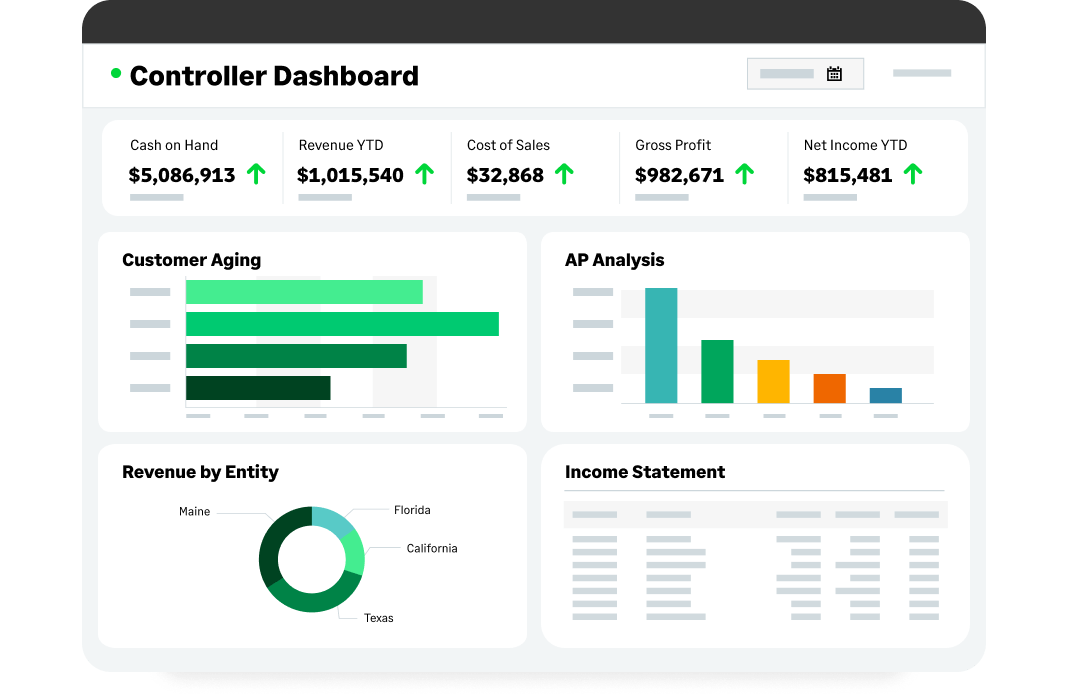
Its target user is the internal finance team of a mid-market organization: a CFO managing multiple subsidiaries, a nonprofit with grant compliance requirements, a SaaS company with subscription revenue recognition complexity, or a healthcare organization with multi-location reporting needs.
It competes most directly with NetSuite in the mid-market ERP-adjacent space.
💡 Insight: Sage Intacct is built for the finance function inside a complex organization. It’s not designed for CPA firms managing many external client entities. If you’re an outsourced accounting provider looking for a platform to manage multiple client entities, Sage Intacct is oriented toward a different use case.
The feature comparison between Xero and Sage Intacct is less a matter of which does something better and more a matter of whether the feature exists at all.
In several categories, Xero doesn’t offer the capability natively; in others, Xero is genuinely sufficient and the added complexity of Sage Intacct isn’t justified.
The GL architecture is the most significant difference between these two platforms, and it compounds across every other feature category.
How each platform handles segmentation, dimensions, and multi-entity structure determines whether closing the books takes two days or two weeks at scale
💡 Insight: Sage Intacct's dimension-based GL means the chart of accounts stays compact regardless of how many entities, departments, projects, or cost centers you add. In Xero, each new variable adds account codes. At scale, this difference is what determines whether a month-end close is a two-day process or a two-week one.
For a single-entity business, Xero's bank reconciliation experience is clean and accessible. Sage Intacct's tooling is built for a different operating reality: high-volume, multi-entity environments where manual reconciliation across accounts isn’t viable.

The reporting gap between Xero and Sage Intacct is structural rather than feature-by-feature. Xero provides solid standard reporting for a single entity. Sage Intacct provides real-time consolidated reporting across an entire group, accessible mid-month without waiting for close.
Xero handles AP competently for SMB volumes. Sage Intacct's AP automation is built for organizations where manual bill entry is itself a significant operational overhead.
For businesses with deferred revenue, subscription billing, or multi-element arrangements, the native revenue recognition gap in Xero isn’t something the App Store closes easily.
Sage Intacct handles this natively and in compliance with ASC 606 and IFRS 15.
This is the clearest reason the Xero vs Sage Intacct comparison comes up in the first place. The two platforms approach multi-entity accounting from fundamentally different starting points.
Both platforms have project accounting capability. The depth and integration differ substantially, and for firms with complex project billing requirements, the two aren’t equivalent.
Xero's project tracking is functional for straightforward time-and-materials billing. Sage Intacct's project accounting is a full professional services automation suite, including AI-powered timesheet building and resource management.
Xero is a horizontal platform. Sage Intacct has purpose-built modules for specific industries, and this depth is one of the primary reasons organizations choose it over alternatives.
If your client or organization operates in any of these verticals, the purpose-built modules represent a genuine differentiator that App Store integrations in Xero can’t fully replicate.
Both platforms handle transactional multi-currency. Where they diverge is in how rates are sourced, which plan multi-currency unlocks on, and how the platforms handle group-level FX consolidation.
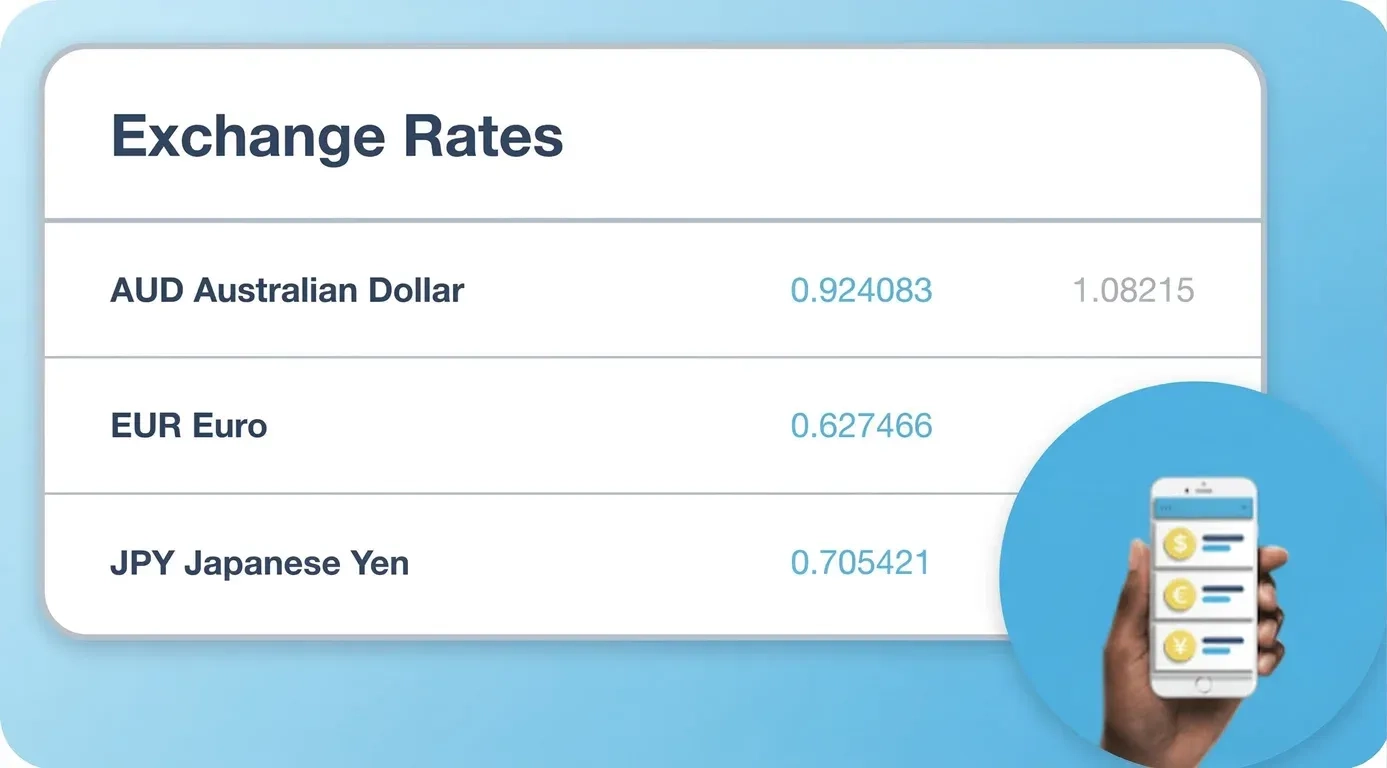
Xero requires Premium ($75 per month) for multi-currency. Sage Intacct includes multi-currency natively across all plans, using OANDA real-time rates and automated currency tables.
At the group consolidation layer, Sage Intacct handles functional-to-presentation currency translation natively, which is the gap neither Xero nor Zoho Books closes.
Pricing is one of the biggest differences between these two platforms, and it reflects the fundamentally different markets they serve.
Xero's pricing is transparent and predictable. Each organization is a separate subscription, and the per-entity cost scales linearly.
Expenses are an optional add-on from $4/mo. Projects are an optional add-on from $7/mo. The 5% multi-organization discount applies when all subscriptions share the same subscriber email.
Sage Intacct pricing isn’t publicly listed. Quotes are issued on request through an implementation partner and vary based on module selection, user count, and contract terms.
Published market estimates range from approximately $12,000 to $75,000 or more per year.
⚠️ Watch Out: The opening quote from Sage Intacct rarely reflects the total deployment cost. Module selection, implementation partner fees, and onboarding time consistently add to the initial figure. Before evaluating Sage Intacct against a more transparent pricing model, request a scope-based quote that includes all modules required for your operational needs and a full implementation estimate from a certified partner.
The right platform depends on the complexity of the entity structure, the regulatory environment, and who’s responsible for the books. The following profiles reflect where each platform genuinely fits.
Xero is the right choice. It’s clean, well-supported, and backed by an unlimited user model that scales with team size without adding per-seat cost.
For clients outside the US or with international bank accounts, Xero's coverage is particularly strong.
Sage Intacct is worth a serious evaluation if the organization has multiple subsidiaries, operates in a regulated vertical, or has revenue recognition complexity that Xero can’t handle natively.
The implementation is heavier and the cost is significantly higher, but the architecture matches the operating need.
Neither platform was built for this operating model. Xero requires a separate subscription per client entity and has no consolidated reporting. Sage Intacct is designed for internal finance teams managing their own entities, not for outsourced providers managing portfolios of external clients.
This is where the final section of the article is most relevant.
For outsourced accounting firms and family offices managing portfolios of client entities, the Xero vs Sage Intacct comparison is ultimately a comparison between the wrong two tools. The architecture that matters for this operating model is one built around external, multi-client, multi-entity management from the ground up.
Eleven is built specifically for CPA firms and family offices in this position. Every client entity has its own general ledger, chart of accounts, and permissions, but all operate within a single platform under a unified dashboard.
Consolidated group reporting generates natively in real time. Intercompany transactions are available as an add-on. The platform supports over 170 currencies with automated FX revaluations, full analytical dimensions, and integrated document management via Dokmee.
If you’re managing multiple clients and not sure Xero or Sage Intacct is the right fit, a free trial of Eleven will show you how the platform handles multi-entity operations, consolidation, and audit trails in a single platform.
Xero and Sage Intacct are both excellent platforms for the operating models they were designed for. Choosing between them is only the right question if one of those operating models matches yours.
Xero is the right platform for single-entity SMBs and accountant-managed businesses that need clean, accessible books with unlimited users and a strong international footprint. Sage Intacct is the right platform for mid-market organizations managing their own subsidiaries, particularly in regulated verticals with revenue recognition or grant compliance complexity.
For outsourced CPA firms and family offices managing portfolios of external client entities, both platforms share the same answer: they weren’t designed for that environment.
They serve different markets, so the comparison depends on your context. Xero is better for single-entity SMBs and accountant-managed businesses that want transparent pricing, unlimited users, and a clean interface. Sage Intacct is better for mid-market organizations with multi-entity consolidation requirements, vertical-specific compliance needs, and the budget for a formal implementation.
No. Xero has no native multi-entity consolidation. Each organization is an isolated subscription. Consolidated reporting across organizations requires exporting data from each entity separately and assembling it manually in a spreadsheet.
Xero offers a 5% discount on additional organizations sharing the same subscriber email, but that’s the full extent of its multi-entity support.
Xero costs $29 to $75 per organization per month, with fully transparent published pricing. Sage Intacct doesn’t publish pricing. Market estimates for core financials start at approximately $12,000 to $15,000 per year, rising to $25,000 to $75,000 or more per year with additional modules, users, and implementation costs.
Not directly. They don’t compete at the same market level. A business migrating from Xero to Sage Intacct is typically doing so because it has grown into multi-entity consolidation requirements, revenue recognition complexity, or vertical-specific compliance needs that Xero wasn’t built to handle.
The migration involves a formal implementation project and a significant increase in annual spend.
No. Revenue recognition isn’t available in Xero natively. For businesses with deferred revenue, subscription billing, or multi-element revenue arrangements, Xero doesn’t support ASC 606 or IFRS 15 compliance natively.
Sage Intacct handles revenue recognition natively as a core module.
For CPA firms managing multiple external client entities, Eleven is purpose-built for that operating environment. It offers unified multi-entity management, native consolidated reporting, 170+ currency support with automated FX revaluations, analytical dimensions, and integrated document management via Dokmee.
Implementation, migration, and training are included in all plan pricing. The Professional plan covers up to 50 entities at $13,440 per year.
Related content


We are using cookies. Learn more.

.avif)
%20(1).avif)


