Xero vs Sage Intacct (2026): Which One Is Right for Your Firm?
Xero vs Sage Intacct (2026): an SMB platform vs a mid-market financial system. Full comparison of features, pricing, and which one fits your firm's complexity.


Tired of accounting software that works for others but not for you? Discover which platforms actually match your business structure and growth stage.
.avif)
This comparison looks at seven accounting systems and explains which business setups each one is actually designed to handle.
In this article
Choosing the best accounting system used to be simple. Pick a popular tool, connect your bank, and move on.
That approach no longer works.
In 2026, accounting teams face multi-entity structures, stricter compliance expectations, and far more scrutiny during audits. Many well-known platforms still excel at basic bookkeeping, but they break down once documentation, consolidation, and control actually matter.
The result is a crowded market where “famous” tools look good in demos yet struggle in real-world finance environments.
In this guide, you’ll learn which accounting systems fit different business structures, which tools lead in automation, reporting, and compliance, and where popular platforms fall short.
Accounting platforms are built for different levels of complexity. Most fall into one of four categories:
Comparing tools without acknowledging these differences leads to poor decisions. Which is why we evaluated accounting systems based on business structure, operational complexity, and long-term needs.
Instead of naming a single "best" tool, this section breaks down accounting systems by the types of organizations they work best for. Find your business type below to see which platform matches your actual needs.
Eleven is an online accounting system built specifically for family offices and CPA firms that manage multiple entities and require structured, audit-ready financial records.
What it’s best for
Eleven is best suited for family offices and CPA firms that manage multi-entity, document-heavy accounting environments and require consistency, traceability, and structured financial records.
Key strengths
Eleven combines accounting functionality with an integrated document management system, allowing financial records and supporting documentation to live alongside transactions. This structure supports audit readiness and improves internal control for firms overseeing multiple legal entities.
The platform supports multi-entity and multicurrency accounting, bank reconciliation, and standardized reporting workflows. Its design prioritizes clarity and organization over speed alone, which aligns with the operational realities of professional accounting environments rather than solo or transactional use cases.
Known limitations or drawbacks
Eleven is not designed for freelancers or very small businesses seeking minimal setup. It also offers fewer third-party integrations than mass-market platforms, which may matter to teams that rely on specialized add-ons.
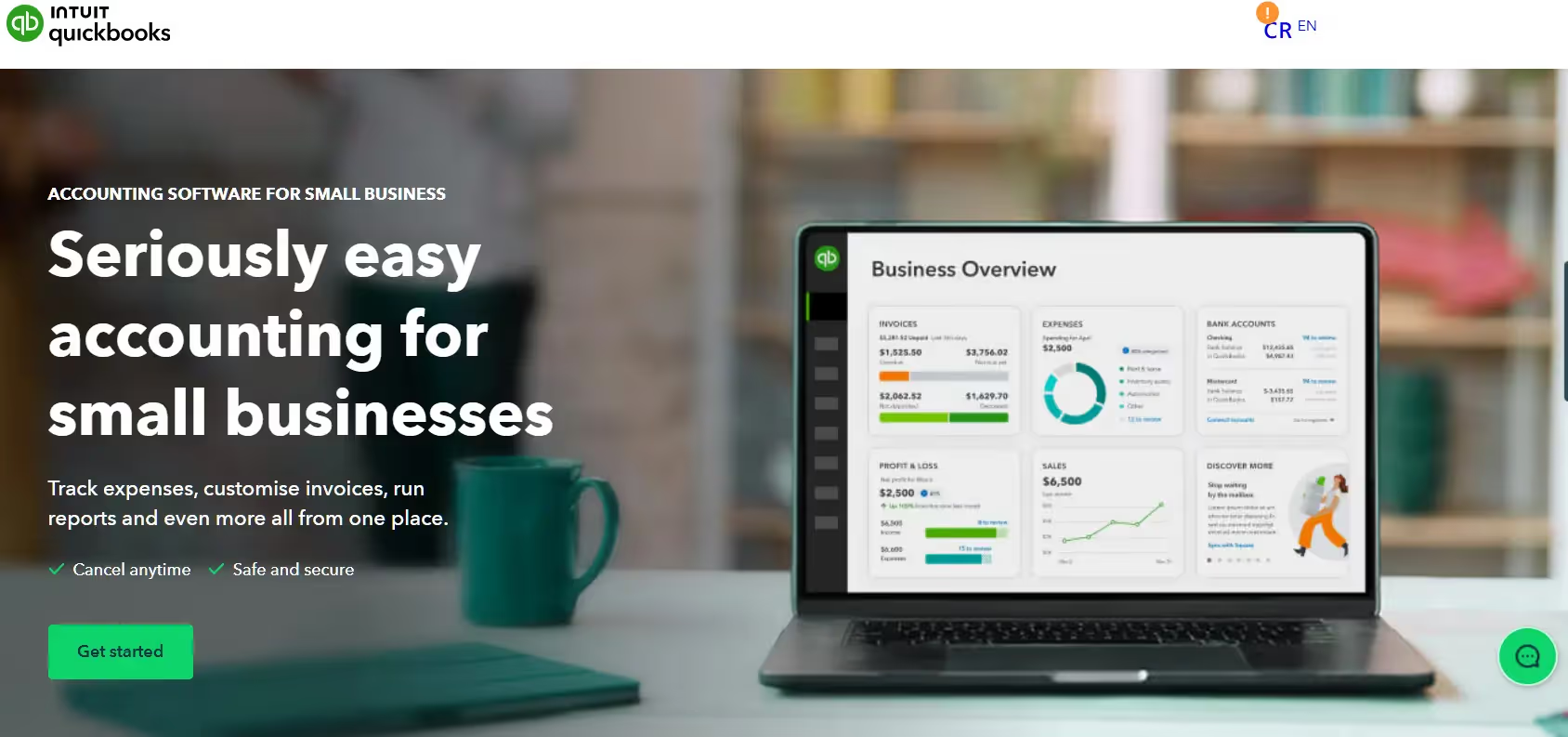
QuickBooks Online is a widely used accounting platform that focuses on basic bookkeeping, invoicing, and third-party integrations.
What it’s best for
QuickBooks Online is best for small businesses that need fast setup, familiar workflows, and broad third-party integrations.
Key strengths
QuickBooks provides invoicing, expense tracking, payroll add-ons, and automated bank feeds. Its large user base and accountant familiarity reduce onboarding friction, and its cloud-based design supports remote collaboration.
Known limitations or drawbacks
QuickBooks Online's core offering has limited native multi-entity support and consolidated reporting. Intuit does offer Intuit Enterprise Suite for more complex structures, though this represents a separate, higher-tier product with additional cost. For standard QuickBooks Online users, complexity often requires workarounds or external tools.
Xero positions itself as a modern, cloud-first accounting system designed around automation, collaboration, and an open integration model.
What it’s best for
Xero is well-suited for businesses that want clean cloud-based automation and strong collaboration with external advisors.
Key strengths
Xero offers automated bank reconciliation, multicurrency support, and real-time dashboards. Its ecosystem of integrations enables extended reporting and operational workflows.
Known limitations or drawbacks
Advanced reporting and budgeting often require third-party add-ons. Xero integrates with over 1,000 third-party apps, so add-ons are available, but Xero lacks these features built-in. Complex entity structures are also not handled natively.
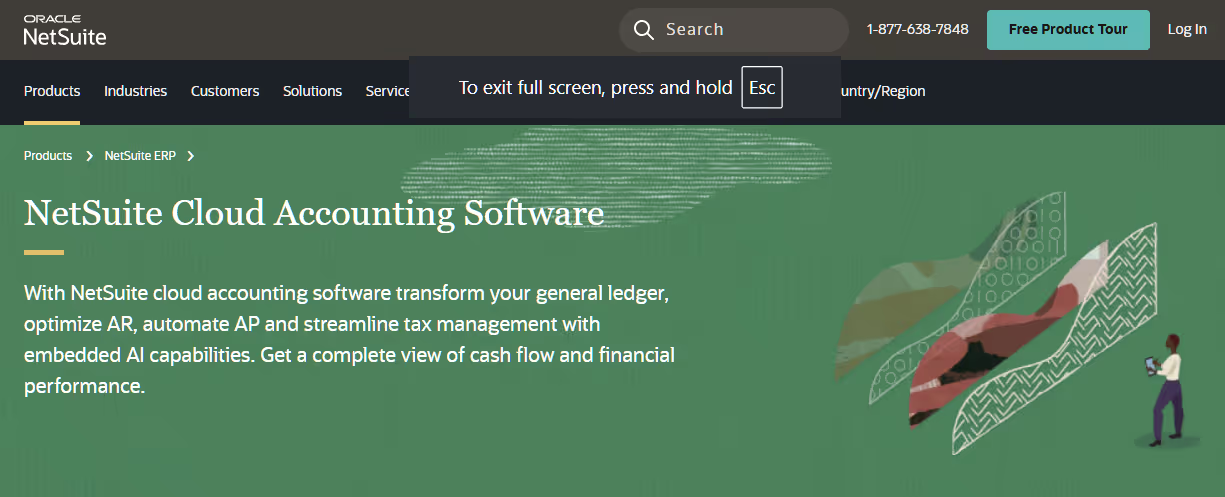
Oracle NetSuite targets larger organizations whose accounting needs exceed the capabilities of general-purpose platforms.
What it’s best for
NetSuite is designed for mid-market and enterprise organizations that require strong internal controls, compliance frameworks, and scalability.
Key strengths
NetSuite supports multi-entity accounting, consolidations, role-based access controls, and audit trails. It is commonly used in regulated environments and by organizations with formal financial governance.
Known limitations or drawbacks
Implementation is complex, costly, and typically requires consultants. NetSuite is not practical for small teams.
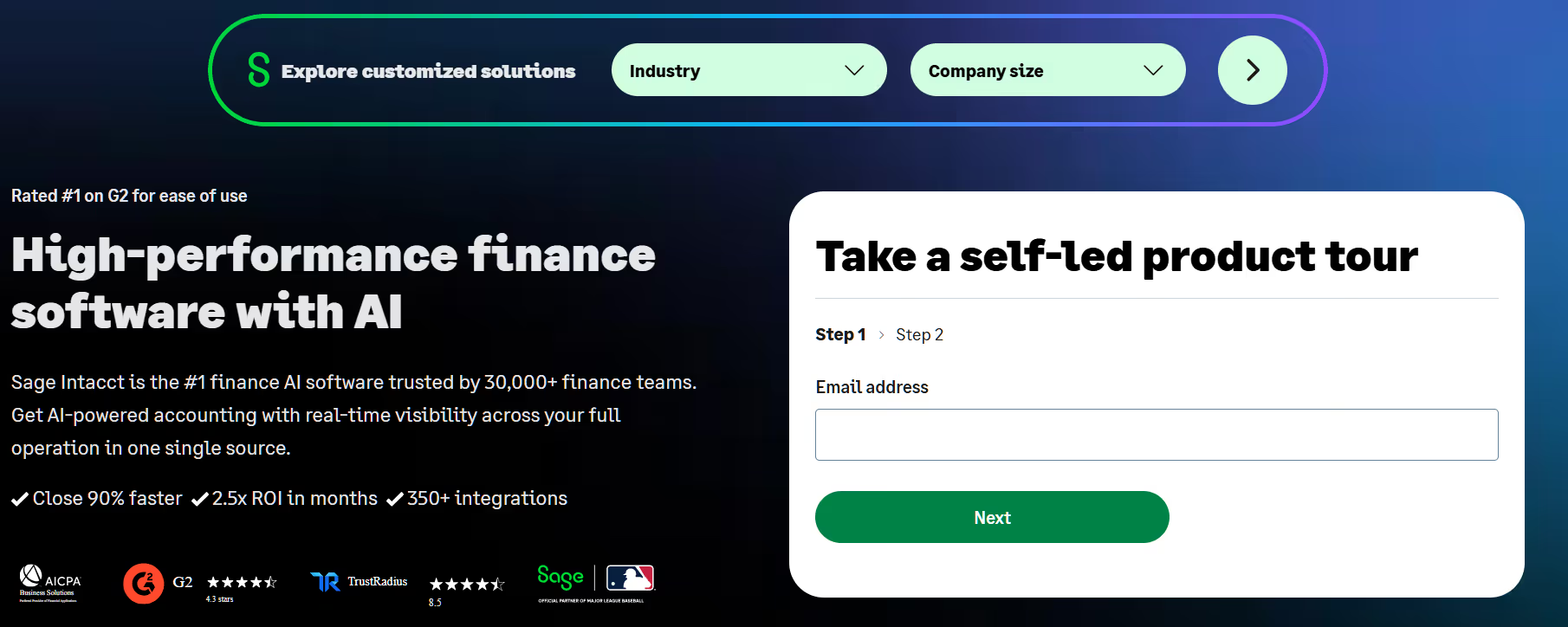
Sage Intacct is an accounting platform used primarily by mid-market organizations, often in environments with more formal financial processes.
What it’s best for
Sage Intacct fits mid-sized organizations and sectors such as nonprofits and professional services.
Key strengths
It offers dimensional reporting, compliance-friendly controls, and multi-entity support without full ERP complexity.
Known limitations or drawbacks
Pricing is higher than SMB tools, and customization may require additional modules.
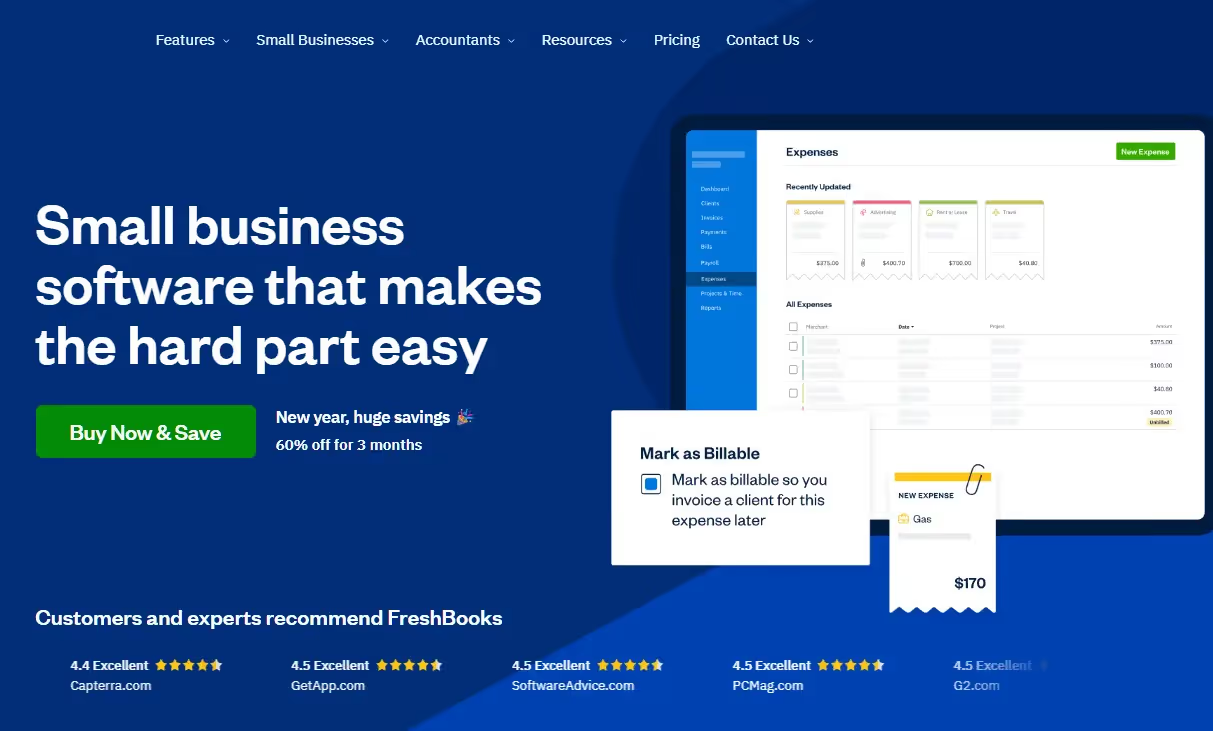
FreshBooks is a lightweight accounting solution focused primarily on billing and financial tracking for client-based service work.
What it’s best for
FreshBooks is designed for service-based businesses focused on invoicing and time tracking.
Key strengths
FreshBooks emphasizes ease of use, client billing, and expense tracking. Its interface is accessible for non-accountants.
Known limitations or drawbacks
FreshBooks lacks advanced reporting, multi-entity support, and complex accounting features.
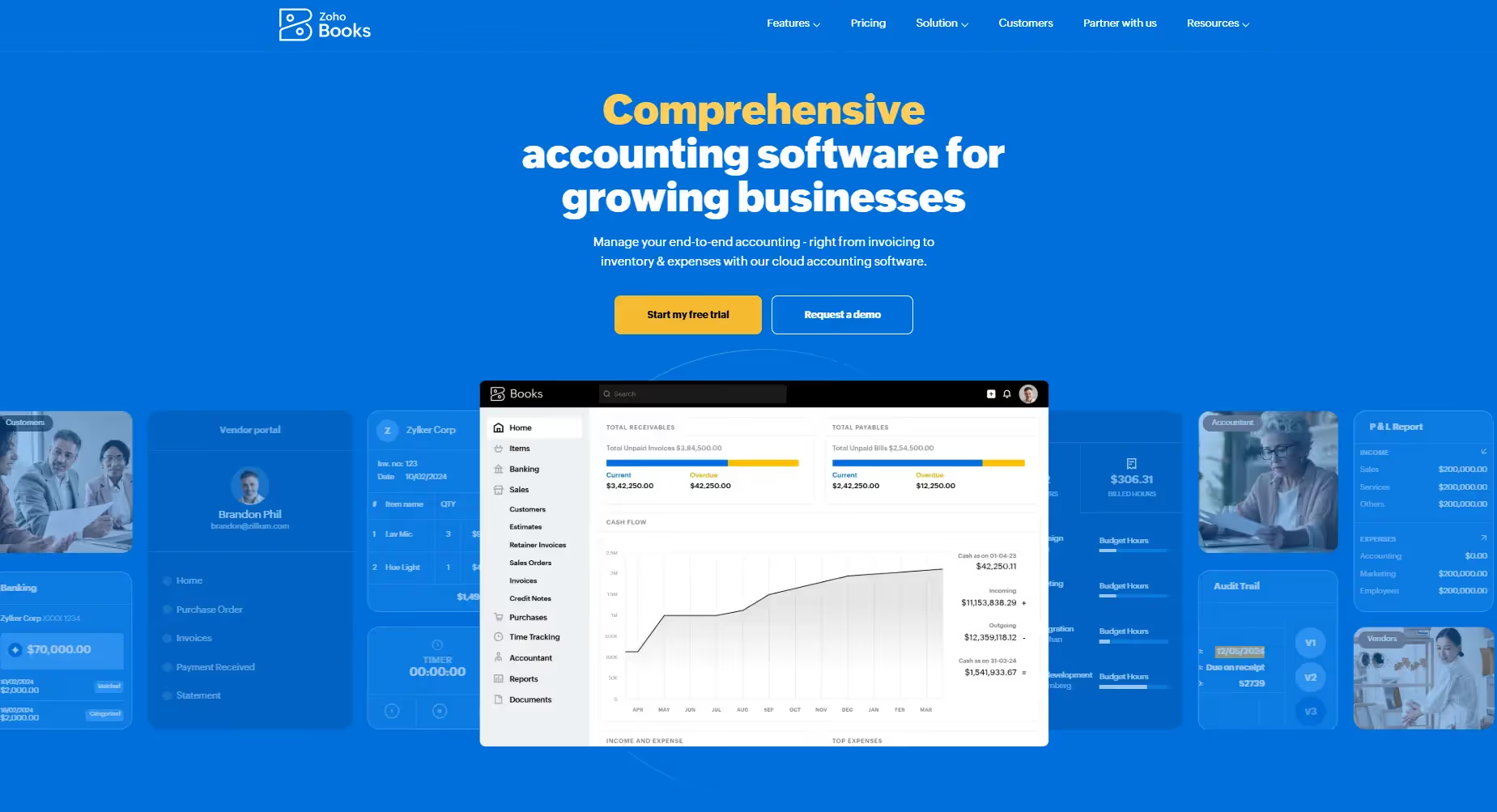
Zoho Books is a cost-effective cloud accounting tool that works best when paired with the broader Zoho business software ecosystem.
What it’s best for
Zoho Books works well for small teams already using the Zoho ecosystem.
Key strengths
It offers automation, invoicing, and reporting at a lower price point than many competitors, with tight integration across Zoho products.
Known limitations or drawbacks
Advanced accounting features and scalability are limited compared to enterprise or multi-entity platforms.
Managing multiple entities breaks most accounting software. If you've tried generic platforms, you know the problem: separate files, separate subscriptions, no way to see the full picture.
Eleven, Sage Intacct, and NetSuite are built differently. They handle multi-entity structures natively, so you don't need workarounds.
Here's the key difference: Eleven gives you entity separation and centralized documentation without the cost and complexity of a full ERP system. If you're a family office or CPA firm, this middle ground is often more practical than enterprise software designed for much larger organizations.
Choosing the right accounting system isn't about picking the most popular or cheapest option. It's about finding a tool that fits how your business works. Before you compare platforms, think about these factors:
There is no universal “best accounting system.” There is only the system that matches your structure.
If your setup is simple, many tools will get the job done. But once you manage multiple entities, shared documentation, and professional oversight, most generic platforms start to show their limits. Workarounds replace workflows. Spreadsheets fill the gaps. Audits become harder than they need to be.
That’s exactly the problem Eleven was built to solve.
If you want to see how structured, multi-entity accounting works without enterprise complexity, you can try Eleven yourself. The platform is available as a 7-day free trial, with full access to its core features.
👉 Start your Eleven test drive here: https://www.runeleven.com/test-drive

Related content


We are using cookies. Learn more.