7 Best Cloud-Based Accounting Solutions for Accounting Firms and CPA Practices (2026)
Last updated:
January 6, 2026 11:13 PM
9
min read


Written by
Noel Bouwmeester
Reviewed by
Noe Saglio
Best Revenue Recognition Software: A Practical Guide
Revenue recognition is under more audit scrutiny than ever. This guide explains how revenue recognition software works, why it matters, and what to look for when choosing a solution.

Revenue recognition software helps businesses record revenue accurately under ASC 606 and IFRS 15.
In this article
76% of accounting leaders say audits are under more scrutiny, and 65% say manual revenue processes increase the risk of errors.
As revenue models become more complex, recognizing revenue accurately has become harder to manage and easier to get wrong.
Choosing the right revenue recognition software is no longer just a technical decision, it directly affects compliance, audit outcomes, and confidence in financial reporting.
This guide compares the best revenue recognition software solutions and explains what to look for across different accounting environments, including how platforms like Eleven support audit-ready revenue recognition.
What Is Revenue Recognition Software?
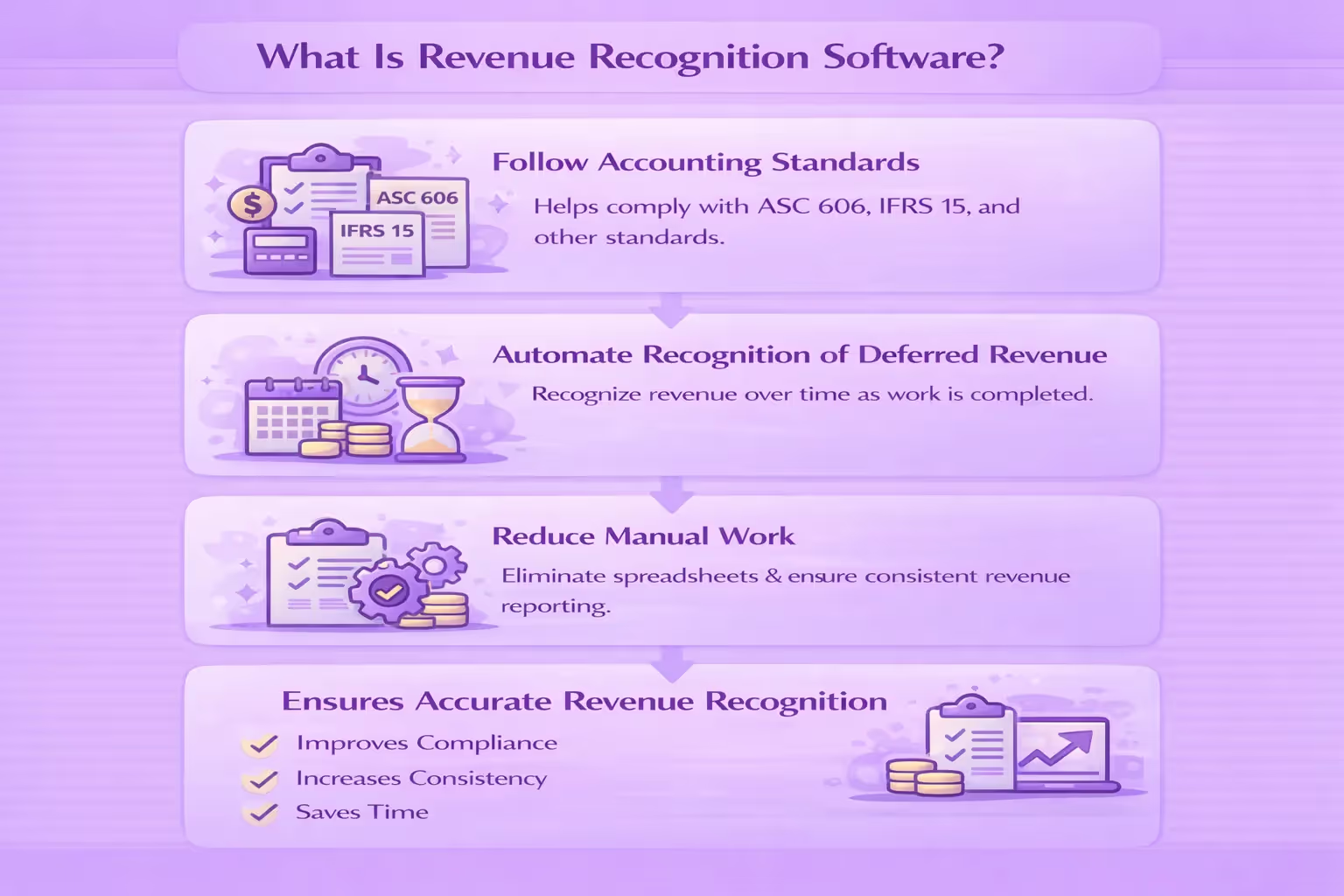
Revenue recognition software helps businesses record revenue correctly in their financial statements, in line with accounting standards such as ASC 606 and IFRS 15.
These standards require revenue to be recorded when work is completed or services are delivered, not just when an invoice is sent or cash is received. As a result, revenue often needs to be delayed and recognized over time, sometimes across different periods, entities, or currencies.
Revenue recognition software uses predefined accounting rules to decide how much revenue to recognize, when to recognize it, and how to manage deferred revenue.
By automating this process, revenue recognition software reduces the need for spreadsheets, improves consistency, and helps ensure revenue is recorded accurately and in line with accounting policies.
Key Features of the Best Revenue Recognition Software
While tools differ in scope and depth, the best revenue recognition software solutions consistently share the following capabilities:
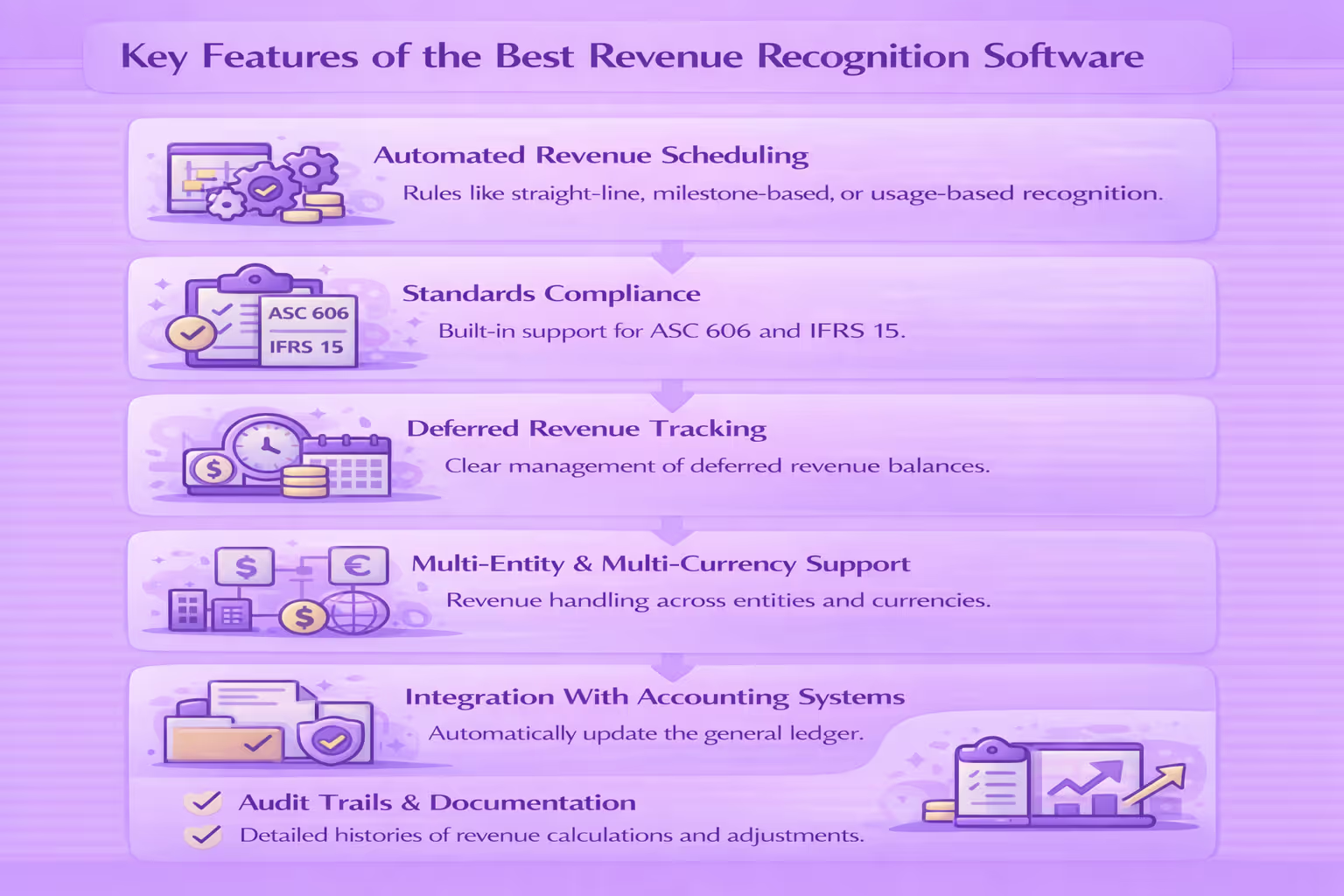
Automated Revenue Scheduling
The ability to apply recognition rules such as straight-line, milestone-based, or usage-based recognition automatically across large volumes of transactions.
Standards Compliance
Built-in support for ASC 606 and IFRS 15, ensuring that revenue is recognized in line with current accounting guidance and applied consistently across contracts.
Deferred Revenue Tracking
Clear tracking of deferred revenue balances and systematic release into the appropriate accounting periods as performance obligations are satisfied.
Multi-Entity and Multi-Currency Support
Native handling of revenue across entities and currencies, enabling consolidated reporting without manual currency adjustments.
Integration With Accounting Systems
Automatically records recognized revenue in the general ledger, reducing manual journal entries and reconciliation work.
Audit Trails and Documentation
Detailed histories of calculations, assumptions, adjustments, and rule changes, allowing finance teams to clearly explain how revenue figures were derived.
Reporting and Visibility
Access to reports showing recognized revenue, deferred balances, and future revenue schedules to support forecasting and financial planning.
Best Revenue Recognition Software Solutions
Different organizations solve revenue recognition in different ways, depending on their business model and accounting environment. Below are several widely used solutions, each with a distinct focus.
Younium – Best for subscription businesses
Younium is a subscription management and billing platform that includes built-in revenue recognition. It is primarily designed for subscription-based businesses that want to manage recurring revenue end to end, from contracts to billing and recognition.
Key revenue recognition capabilities include:
- Automated revenue recognition schedules based on subscription and contract data
- Support for ASC 606 and IFRS 15 compliance
- Recognition logic that adjusts automatically for upgrades, downgrades, renewals, and cancellations
- Multi-entity and multi-currency support for international subscription businesses
- Clear traceability from subscription agreements through to recognized revenue
Because revenue recognition in Younium is closely tied to subscription billing workflows, it works well for companies with predictable, recurring revenue models. Finance teams benefit from automation and reduced manual adjustments when subscription terms change.
However, Younium’s revenue recognition functionality is tightly coupled to its subscription and billing framework.
Organizations with more complex accounting environments, multiple clients, or non-subscription revenue streams may still require a dedicated accounting platform to manage reconciliation, reporting, and audit documentation beyond the subscription lifecycle.
Maxio – Best for SaaS revenue teams
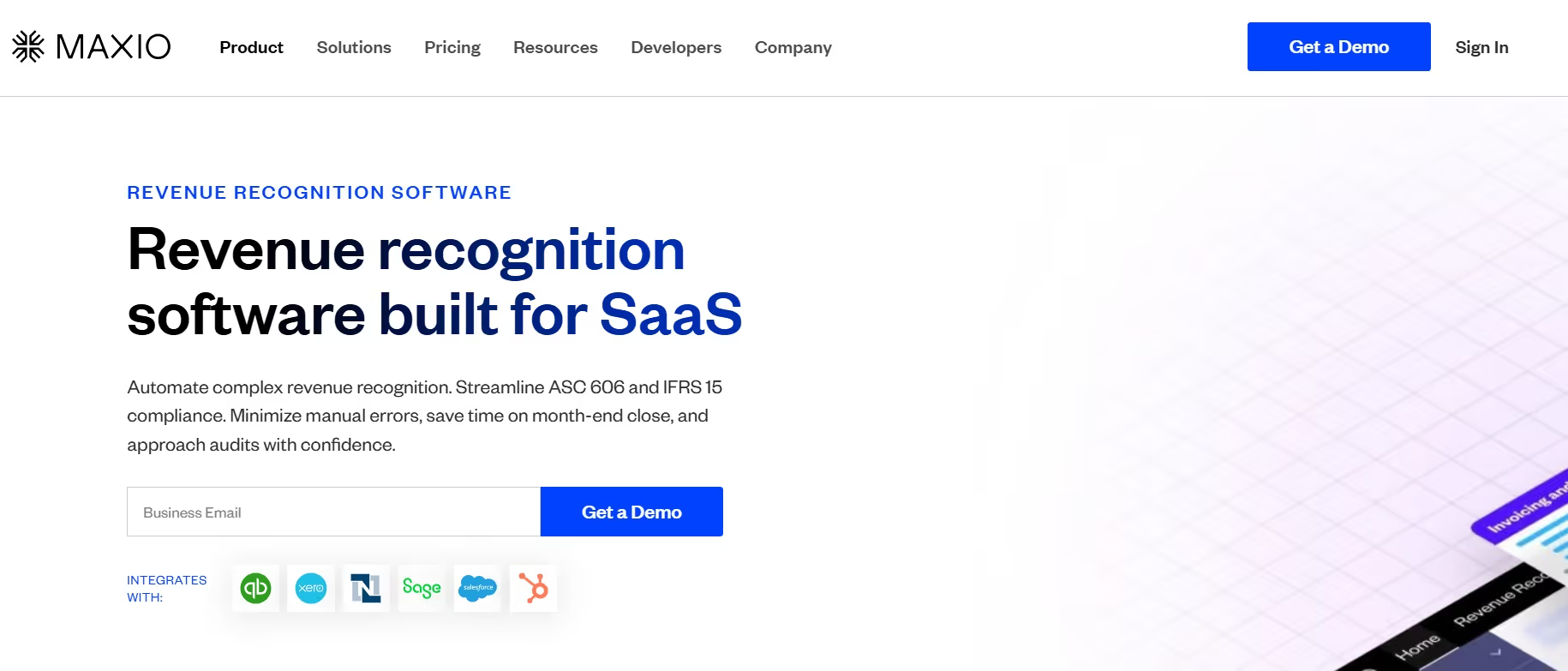
Maxio is a billing and financial operations platform built for SaaS and recurring-revenue companies. It combines subscription billing, usage-based pricing, and revenue recognition to help finance teams manage recurring revenue more efficiently.
From a revenue recognition perspective, Maxio automates revenue recognition in line with ASC 606 and IFRS 15. Revenue schedules are generated based on contract and billing data, reducing reliance on manual calculations and spreadsheets.
The platform provides visibility into recognized revenue and deferred balances, supporting audit preparation and financial reporting.
Key revenue recognition capabilities include:
- Automated revenue recognition aligned with ASC 606 and IFRS 15
- Revenue schedules generated from contract and billing data
- Ability to adjust revenue schedules without overwriting original records
- Detailed revenue reports and audit trails to support compliance and reviews
- Synchronization of invoices and recognized revenue with general ledger systems
Because Maxio combines billing and revenue operations in a single platform, it works well for SaaS finance teams that want centralized visibility into recurring revenue alongside compliant revenue recognition.
Important: Maxio’s revenue recognition functionality is closely tied to SaaS billing and monetization workflows. Organizations with broader accounting requirements, multiple client entities, or non-SaaS revenue models may still rely on a separate accounting platform to manage reconciliation, consolidation, and audit documentation outside the billing lifecycle.
Salesforce Revenue Cloud – Best for Salesforce-centric enterprises
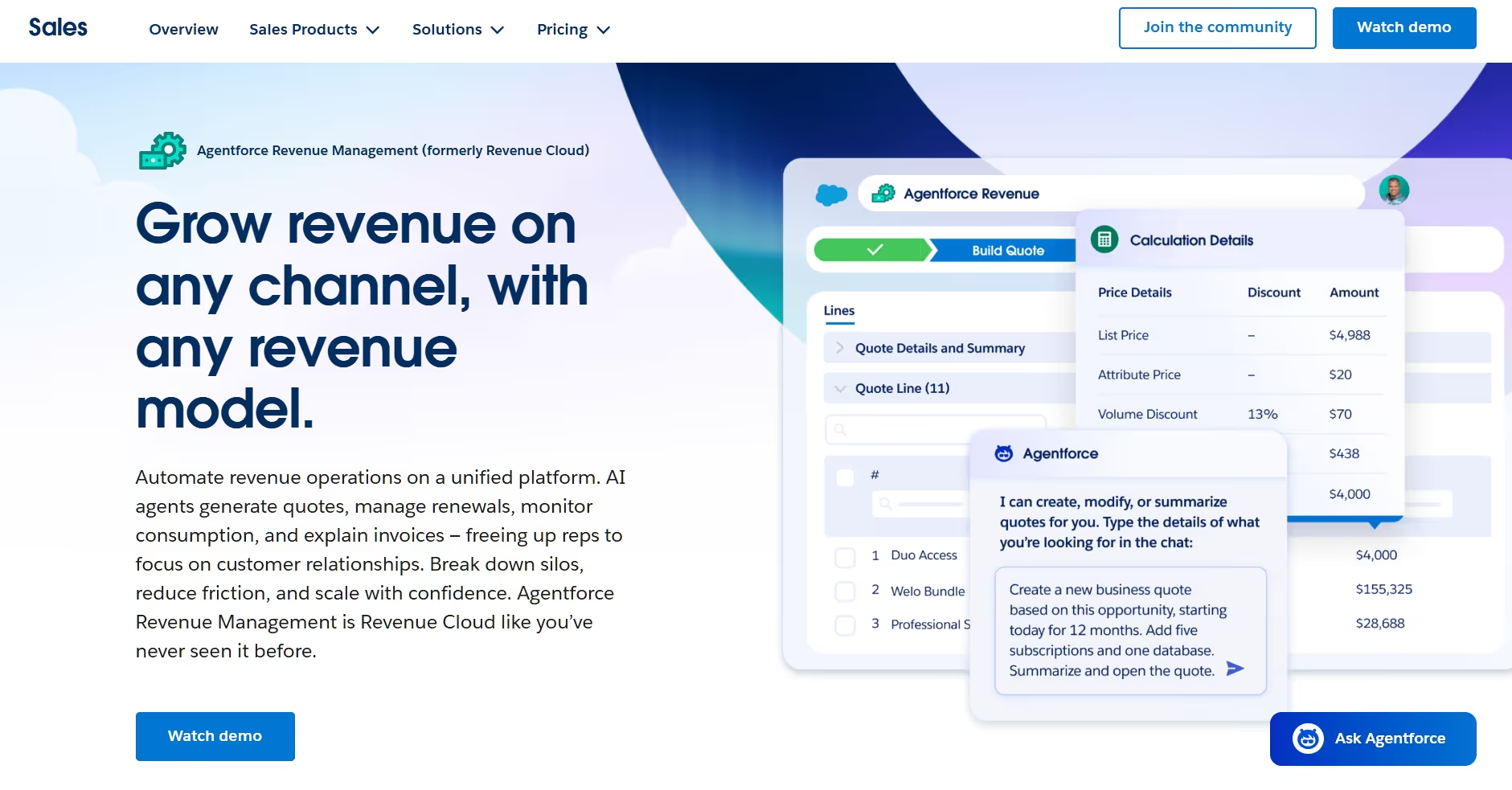
Salesforce Revenue Cloud (also referred to as part of Salesforce’s Revenue Lifecycle Management suite) is a cloud-native revenue operations platform built on the Salesforce CRM ecosystem.
It unifies processes across the quote-to-cash lifecycle, including quoting, contracting, order management, billing, and analytics, with the goal of improving accuracy and visibility across revenue operations.
Salesforce positions Revenue Cloud as a complete platform for managing revenue processes from contract creation through billing, with support for subscription, usage, and hybrid revenue models.
The platform connects product catalogs, pricing, and revenue analytics so teams across sales, finance, and operations can work from a shared data model.
Key capabilities include:
- Centralized configuration, pricing, quoting (CPQ) and contract management within Salesforce CRM
- Order orchestration and billing automation for multiple revenue models, including subscriptions and usage-based pricing
- Support for ASC 606 and IFRS 15-aligned processes, helping finance teams reduce downstream revenue recognition risks by using consistent contract and billing data
- Integrated analytics and dashboards for revenue operations, including insights into recognized and deferred revenue and billing performance
- Native integration with other Salesforce clouds (Sales, Service, Experience), enabling revenue-related workflows to span CRM and revenue operations without additional middleware
Because Revenue Cloud is built within the Salesforce ecosystem, it works best for organizations that are already heavily invested in Salesforce products and data models.
Finance teams may benefit from the unified view of revenue operations, but implementation often involves configuration within the broader Salesforce architecture and may require coordination across sales and IT teams.
NetSuite Advanced Revenue Management – Best for NetSuite ERP users
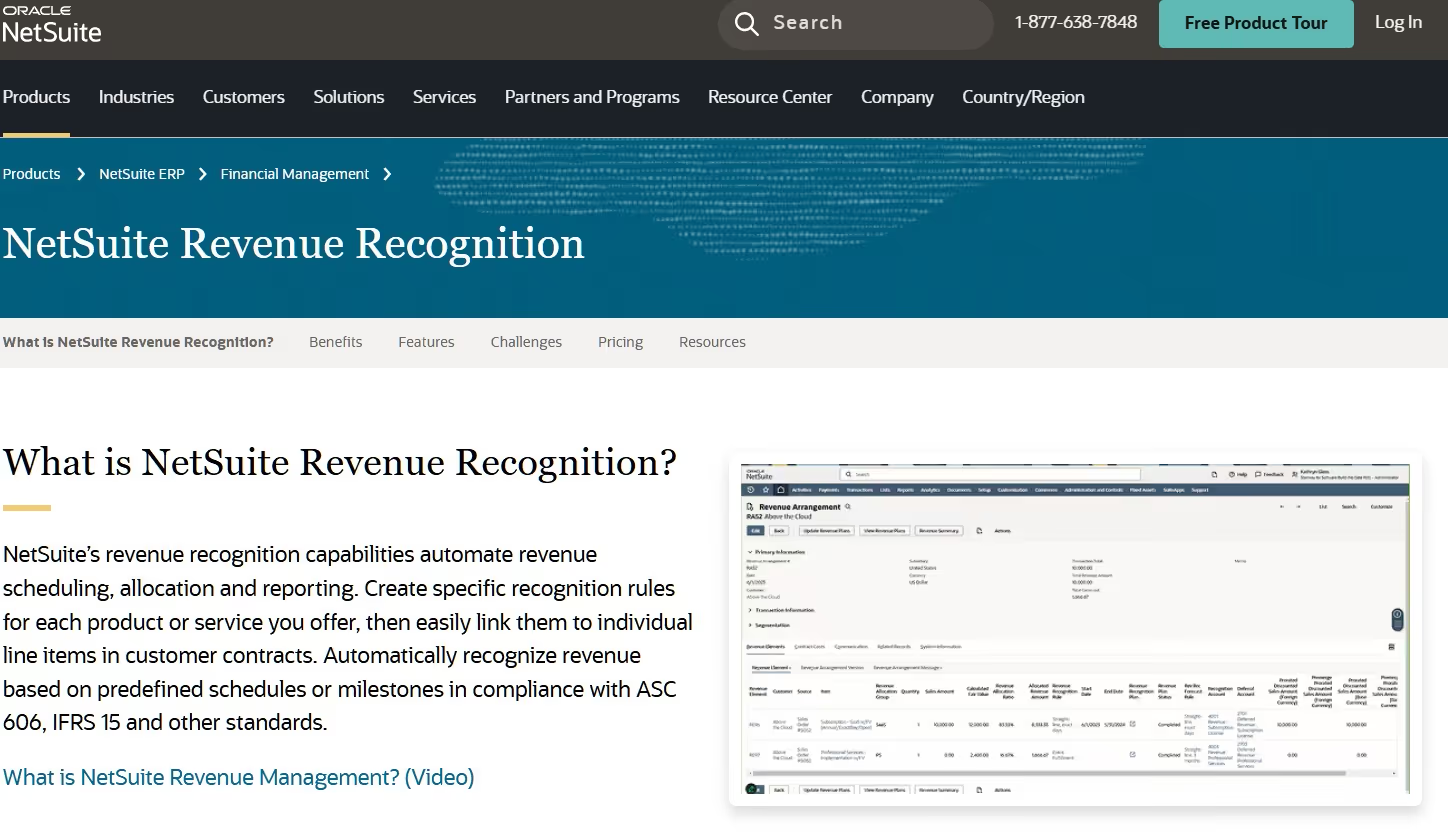
NetSuite’s Advanced Revenue Management (ARM) is a native revenue recognition and management capability within the NetSuite ERP platform.
ARM embeds revenue recognition into the broader ERP environment, letting organizations automate revenue deferrals, recognition schedules, reclassification, and reporting within a single financial system.
Rather than relying on disconnected spreadsheets or manual journal entries, ARM applies predefined recognition rules and revenue plans across contracts, sales orders, and invoices to ensure revenue is recorded in compliance with accounting standards such as ASC 606 and IFRS 15.
Key revenue recognition capabilities include:
- Rule-based revenue recognition plans and schedules that automate how and when revenue is recognized across multiple periods.
- Revenue arrangements and elements that represent performance obligations and link to source transactions for line-level traceability.
- Deferred revenue and unbilled receivable management to ensure recognition aligns with delivery and billing events.
- Support for embedding revenue recognition journal entries directly into the ERP general ledger.
- Optional add-on features such as Revenue Allocation to apply fair value pricing and allocate transaction prices across performance obligations.
Because ARM operates within NetSuite’s ERP, recognized revenue and associated journal entries are part of the system’s core financial workflows, which can improve consistency and reduce manual effort across revenue accounting and reporting.
This makes ARM commonly used by mid-to-large enterprises and organizations with complex revenue arrangements that benefit from an ERP-level solution rather than standalone tools.
Financial teams in these environments value the automation, audit-ready controls, and centralized revenue recognition framework that ARM provides.
Eleven – Best for CPA firms and family offices
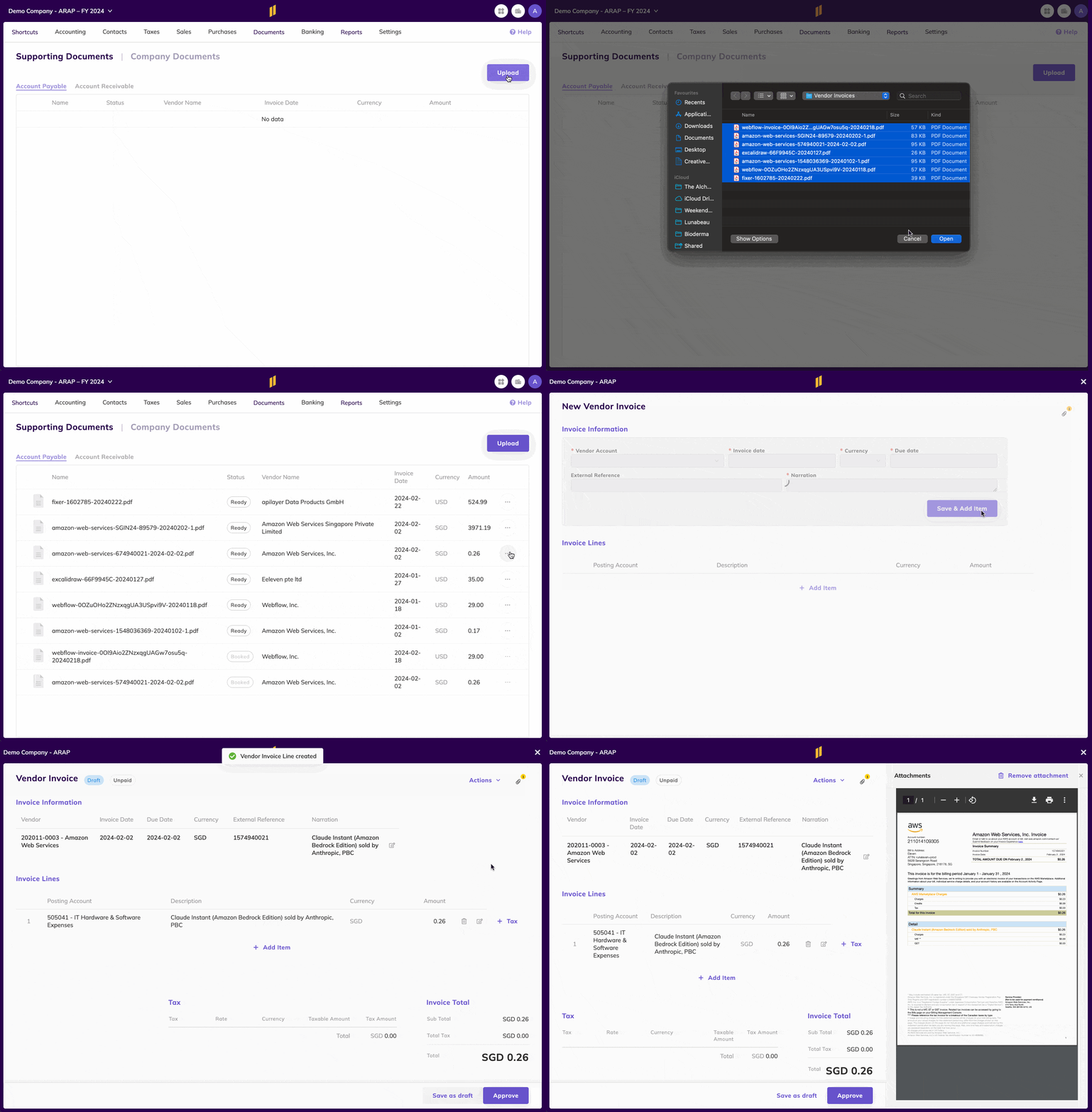
Eleven approaches revenue recognition from a different angle than billing-led or ERP-centric tools.
Rather than positioning itself as a standalone revenue recognition engine, Eleven is online accounting software designed specifically for CPA firms and family offices that manage complex accounting structures across multiple clients, entities, and reporting periods.
Revenue recognition in Eleven is handled directly within structured accounting workflows. Finance teams can manage deferrals, periodic recognition entries, and adjustments inside the accounting system itself, reducing reliance on spreadsheets and helping ensure revenue recognition policies are applied consistently and documented clearly.
Key capabilities that support revenue recognition include:
- Revenue deferrals and periodic recognition entries handled natively within accounting workflows
- Consistent application of revenue recognition policies across clients, entities, and periods
- Native multi-currency and multi-entity accounting, supporting consolidated reporting without manual currency workarounds
- Integrated bank reconciliation and reporting, ensuring recognized revenue is properly recorded and reconciled in the general ledger
- Built-in audit trails that make it easier to review and explain revenue recognition decisions
A key differentiator is Eleven’s integrated document management system, powered by Dokmee.
Contracts, revenue schedules, and supporting documentation can be stored directly alongside accounting records, making it easier to support revenue recognition judgments during audits and reviews without relying on external file systems.
By combining revenue recognition workflows with accounting controls, reconciliation, reporting, and document management, Eleven supports audit-ready revenue recognition within a single accounting environment.
This makes it particularly well suited for CPA firms and family offices that need accuracy, consistency, and audit defensibility across complex accounting structures rather than a standalone revenue calculation tool.
Revenue Recognition Software Comparison
What Is the Best Revenue Recognition Software for Multi-Currency Transactions?
The best revenue recognition software for multi-currency transactions can handle multiple currencies and entities out of the box. It applies exchange rates consistently and supports consolidated reporting without manual work.
For companies operating internationally, revenue recognition is more complex. Different currencies, legal entities, and reporting requirements increase the risk of mistakes when handled in spreadsheets.
Good multi-currency revenue recognition software tracks revenue at the transaction level. It applies exchange rates in a clear, consistent way and supports reporting across entities and currencies.
Specialized tools are often used to calculate revenue schedules. Accounting platforms like Eleven then ensure multi-currency revenue is recorded, reconciled, and reported correctly in the general ledger.
Final Thoughts
Choosing the best revenue recognition software is not just about compliance. It is about accuracy, audit readiness, and trust in financial reporting.
While dedicated revenue recognition tools automate complex accounting logic, their effectiveness depends on the strength of the underlying accounting platform.
Accounting systems like Eleven ensure that recognized revenue is properly recorded, documented, reconciled, and reported, particularly in multi-entity and multi-currency environments.
For CPA firms and family offices managing complex revenue structures, this integration between revenue recognition and accounting control is essential.
Want to see how Eleven supports accurate, audit-ready revenue recognition within modern accounting workflows? Book a demo with Eleven.
Guides
✔

Noel Bouwmeester
Noel Bouwmeester is an SEO content strategist and B2B SaaS writer focused on organic growth, search visibility, and AI-era content discovery. He has contributed to SEO and content marketing initiatives for companies including lempire and lemlist, helping support large-scale organic traffic growth through search-focused content strategies. At Eleven, he contributes educational SEO content focused on accounting technology, automation, and AI-driven business workflows.
.avif)