


%20(1).avif)
The Perks of Automated Bookkeeping for Accounting Pros
Still doing the books in Excel? Read on to learn why and how to automate bookkeeping to your advantage, even if you handle clients with few transactions.


You don't need another invoicing tool. As a CPA firm or family office, you need billing that ties directly into accounting, approvals, reporting, and multi-entity structures. This guide compares leading platforms based on how well they actually support that kind of work.
.avif)
Most software roundups lump CPA firms in with small businesses. That's the wrong lens. What separates a tool that works for professional accounting from one that just looks the part comes down to a handful of capabilities, and most platforms fall short on at least one of them.
In this article
Your firm isn't like every other business, and your billing software shouldn't be either.
As a CPA firm or family office, you already know that billing doesn't exist in isolation. It's tied to accounting accuracy, multi-entity structures, approvals, documentation, and long-term reporting. When that connection breaks down, so does your close.
Most of what you'll find when searching for billing software is aimed at small businesses chasing faster invoices and prettier templates.
That approach breaks down quickly for professional accounting environments, where billing must integrate cleanly with general ledger, accounts receivable, reconciliation, and audit-ready workflows.
That's what this guide is built around. Rather than picking a single "best overall" tool, we match each platform to the type of firm it actually serves well, and tell you where it stops being a good fit.
Before we start comparing tools, it’s important to distinguish basic invoicing software from true accounting billing software used by CPA firms and family offices.
As accounting workflows become more complex, many invoicing tools fall short. The capabilities below define what professional firms should look for.
Billing should be fully integrated with accounting, not handled as a separate process. In professional environments, invoices must flow directly into the accounting system to maintain accuracy without manual work.
At a minimum, billing should post directly into:
When billing is natively integrated, invoices automatically create journal entries, update AR balances, and reconcile against payments, keeping revenue and reporting aligned.
When billing and accounting live in separate systems, firms rely on exports or manual re-entry, increasing reconciliation issues and slowing the close as volume grows.
Recurring invoices address only part of your billing process. Professional firms need controlled workflows that reflect how billing is reviewed, approved, and documented.
Beyond basic automation, look for:
These controls ensure invoices are reviewed before posting, responsibilities are clearly separated, and changes are recorded. This is especially important for firms handling client funds, complex engagements, or regulated reporting.
Together, these capabilities reduce manual oversight, improve accountability, and support compliance as firms scale.
Many CPA firms and family offices manage multiple entities across jurisdictions, each with separate books and currencies. Billing software must support this natively.
Without built-in multi-entity or multi-currency capabilities, firms often rely on separate files or spreadsheets, increasing overhead and reducing confidence in reporting.
Native support allows invoices to be issued in the correct entity and currency while maintaining centralized visibility and consistent reporting.
Without this foundation, billing becomes fragmented as complexity grows.
Billing data must support more than invoice totals and payment status. In professional environments, billing feeds directly into:
When billing is connected to accounting, billed amounts flow directly into financial statements and supporting reports, making reviews and audits easier.
Lightweight billing tools often require spreadsheets or manual adjustments to align billing with financial reporting, adding time and increasing error risk.
As client and entity counts grow, per-entity pricing and fragmented workflows can quickly increase costs and slow your team down.
Software that supports growth within a single workflow helps firms manage complexity without adding operational friction for each new client or entity.
*Standard QuickBooks Online is limited to one company per subscription with no native multi-entity consolidation. Intuit Enterprise Suite, a separate higher-tier product, adds a multi-entity hub with consolidated reporting, intercompany journal entries, and portfolio-level dashboards.
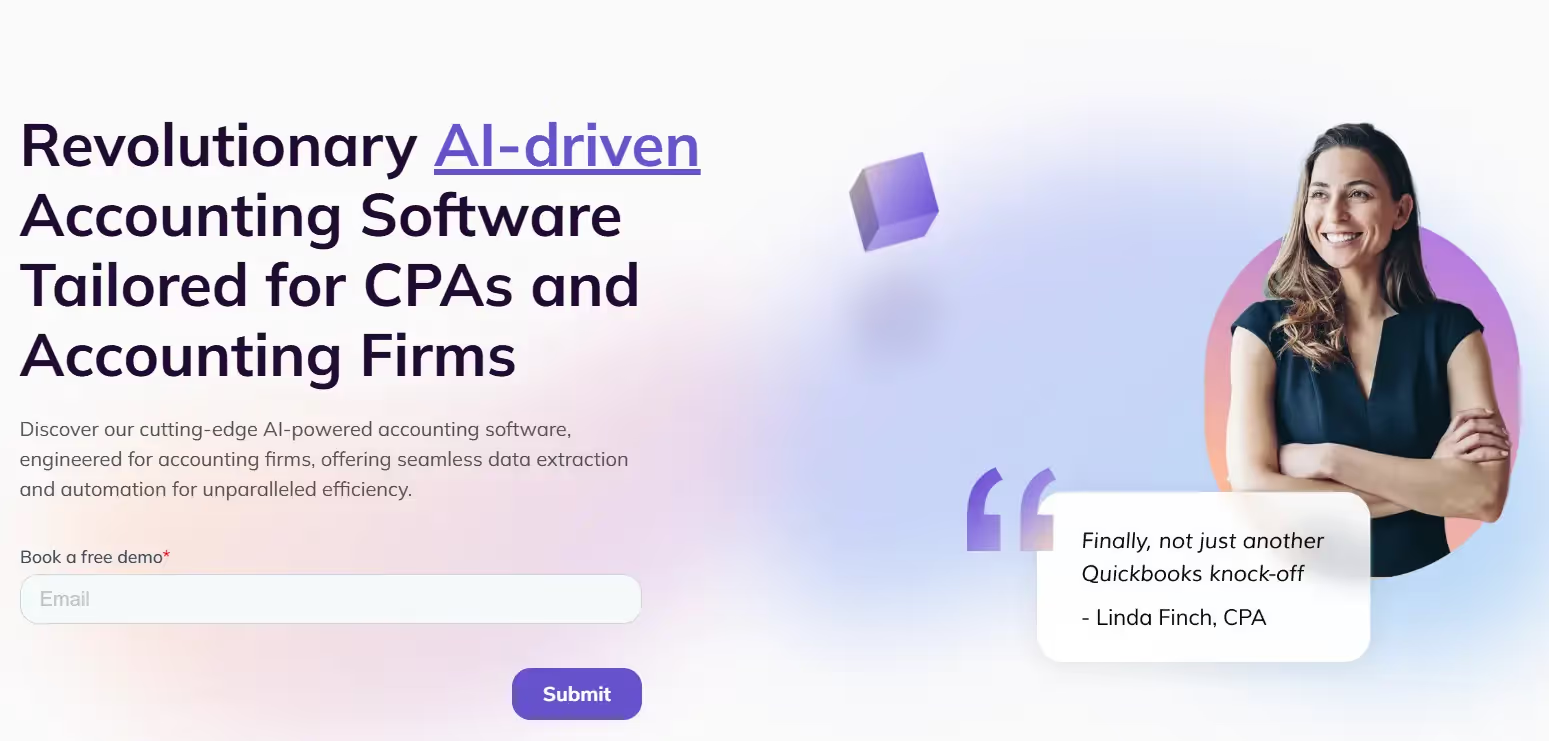
If you've looked at most billing tools and felt like they weren't quite built for what you do, that's because they weren't. Eleven is designed specifically for CPA firms and family offices, where billing is part of a broader accounting workflow involving multiple entities, currencies, approvals, and documentation.
How it supports your CPA firm and family office work
Where it may not be the right fit
If your priority is accuracy, control, and scalability rather than just sending invoices faster, Eleven is built around that.
👉 You can explore Eleven’s workflows with a free trial here.
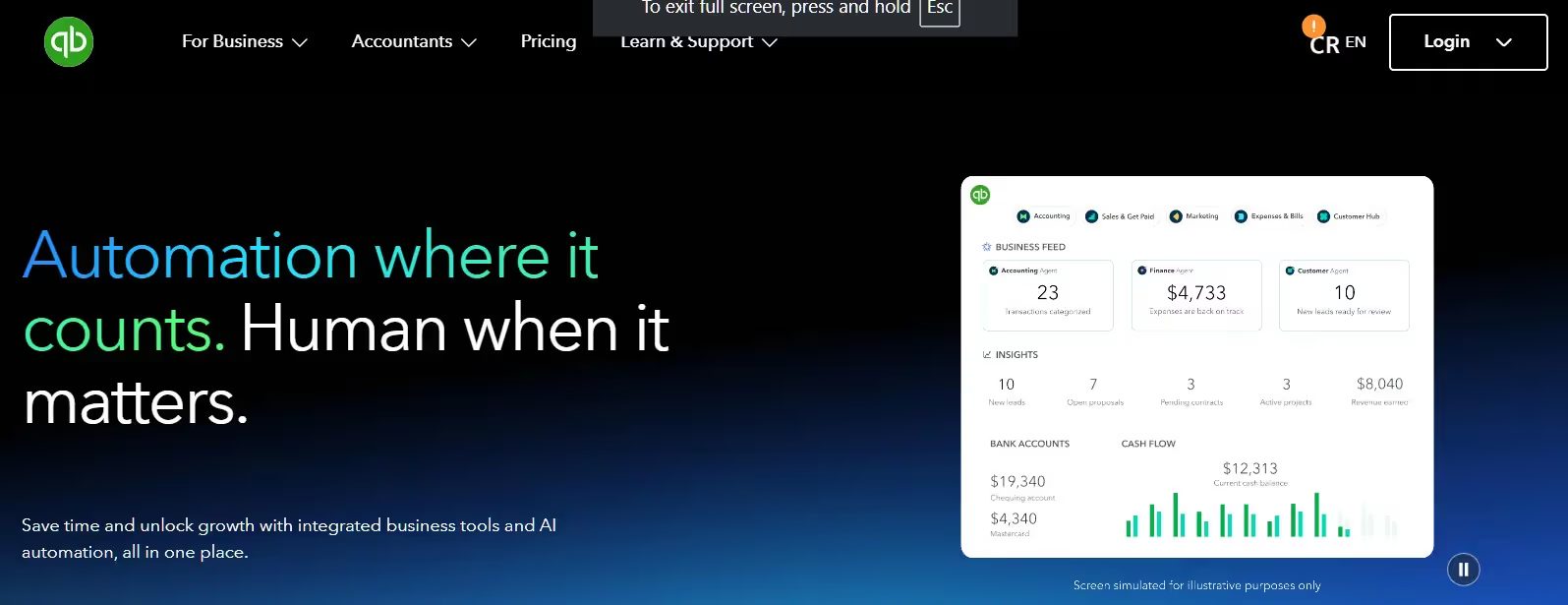
QuickBooks Online is widely used among small and mid-sized accounting practices because it combines invoicing with full accounting, bank feeds, reconciliation, and reporting in a familiar environment.
How it supports CPA firm and family office work
Where it may not be the right fit
Best for: Growing accounting firms with standardized billing and accounting needs, before complexity increases.
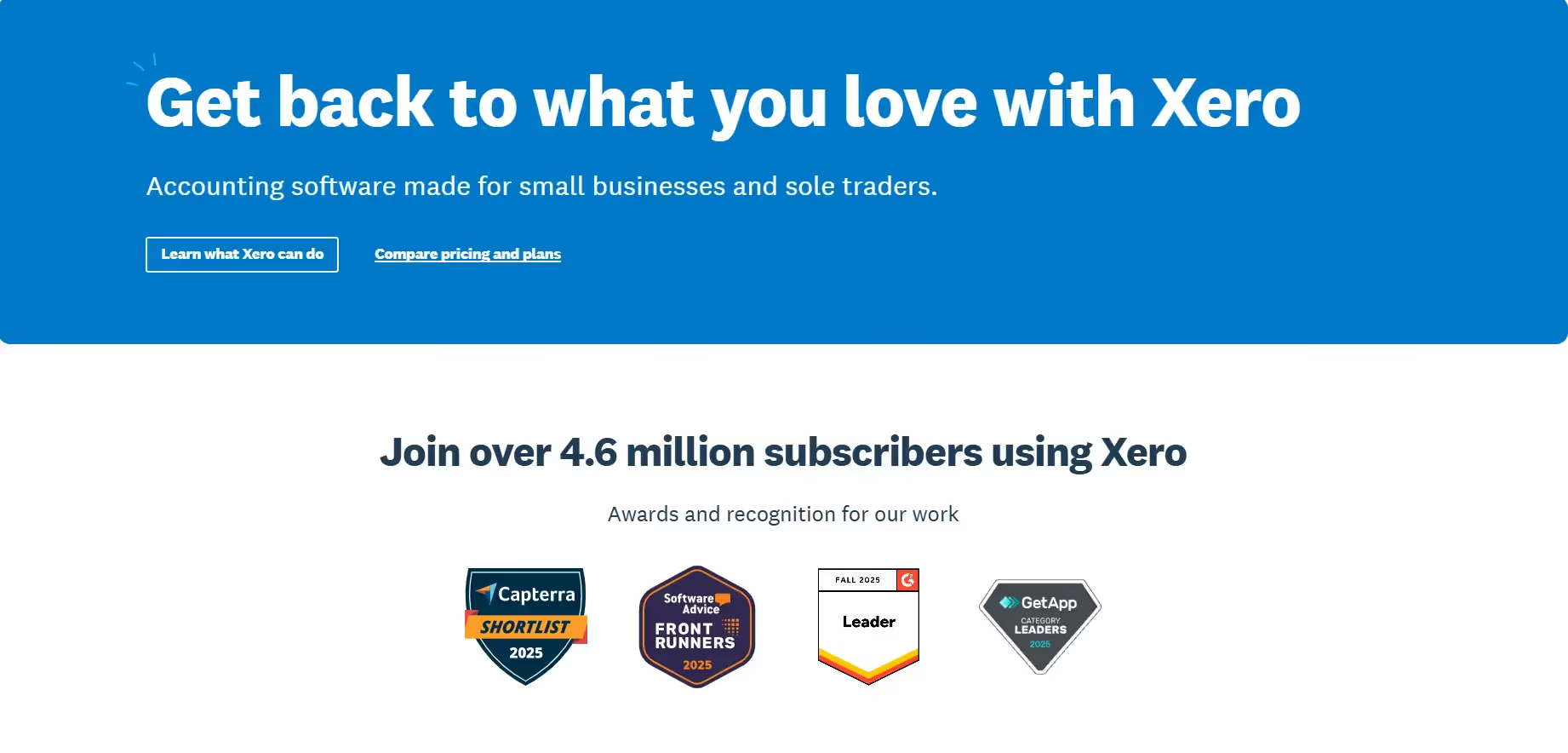
Xero is a cloud-first accounting platform known for its clean interface and strong multi-currency support, making it attractive for firms with international clients.
How it supports CPA firm and family office work
Where it may not be the right fit
Best for: Firms with international exposure but relatively standard billing workflows.
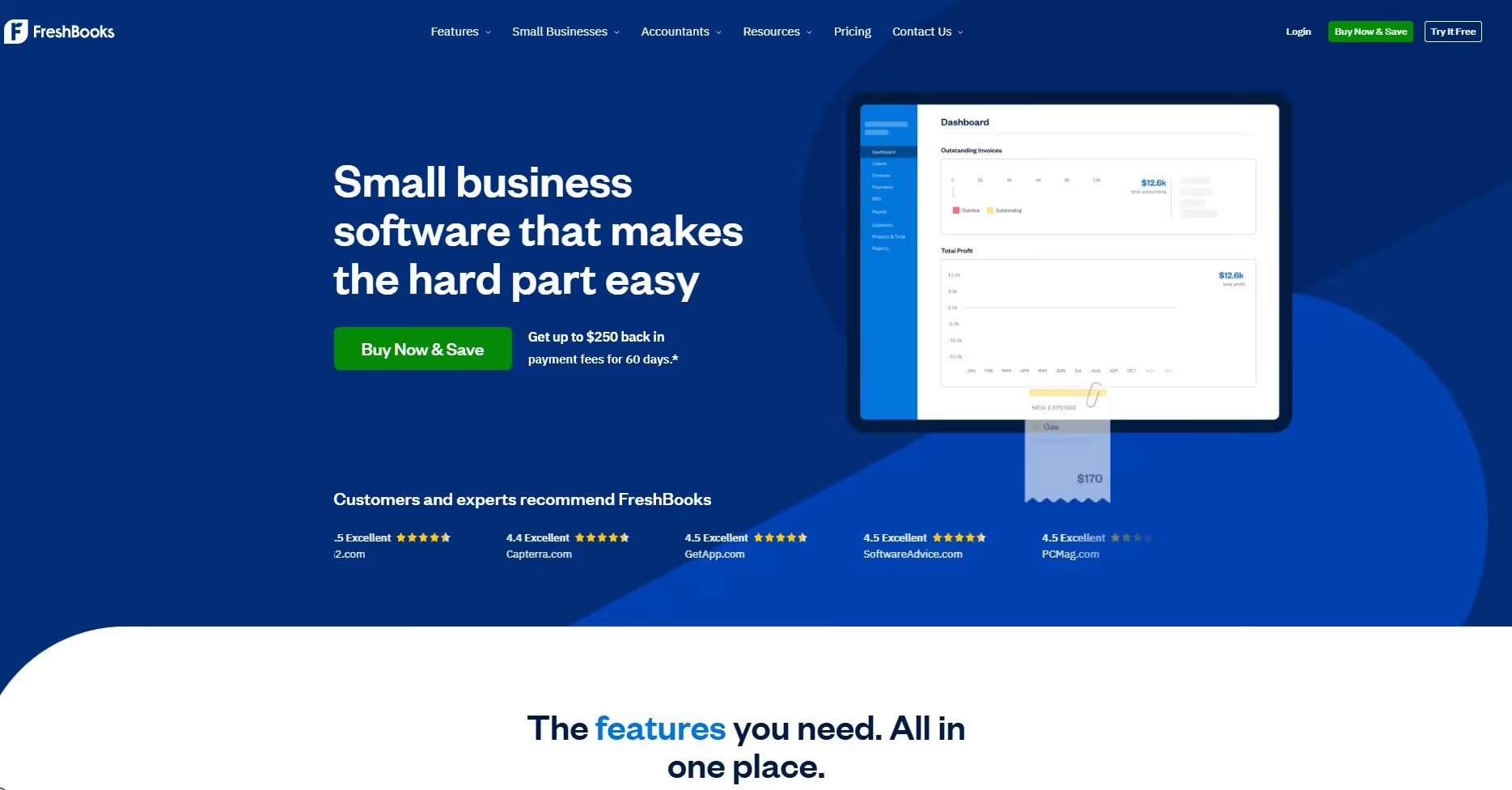
FreshBooks is frequently recommended for invoicing because of its ease of use, time tracking, and client-friendly billing experience.
How it supports CPA firm and family office work
Where it may not be the right fit
Best for: Service-based businesses, not professional accounting firms.
Zoho Books combines invoicing with full accounting at a competitive price point, making it appealing to cost-conscious teams.
How it supports CPA firm and family office work
Where it may not be the right fit
Best for: Smaller teams balancing cost with functionality.
Bill.com focuses on automating accounts payable and receivable workflows and integrates with accounting platforms like QuickBooks and Xero.

How it supports CPA firm and family office work
Where it may not be the right fit
Best for: Firms that already have accounting software and want stronger AP/AR automation.
Rather than asking “Which tool is best?”, professional firms should ask “Best for what stage and structure?”
➡️ If you manage simple billing and bookkeeping, lightweight tools may be enough, but expect to outgrow them.
➡️ If you run a growing accounting practice, on the other hand, look for platforms that integrate billing with accounting and reporting, even if workflows are still relatively standard.
➡️ If you manage multiple entities or family structures, prioritize:
This is where generalist billing tools typically break down.
➡️ Finally, if automation and scale matter, remember that manual data entry and reconciliation do not scale. Platforms that embed automation into accounting workflows reduce long-term operational cost.
There is no single “best overall” accounting billing software.
Only the best fit for your firm’s structure and complexity.
CPA firms and family offices with complex structures need accounting-grade billing, deep workflows, and native multi-entity support. Platforms built for professional accounting, like Eleven, are designed for that reality.
👉 Start a free trial of Eleven here:
https://www.runeleven.com/test-drive
No. Invoicing software focuses on sending invoices, while accounting billing software connects billing directly to the general ledger, accounts receivable, reconciliation, and reporting. For CPA firms and family offices, this distinction matters because disconnected invoicing tools often require manual reconciliation and increase the risk of inconsistencies in financial statements.
Firms usually outgrow basic billing tools when billing starts to slow down closes or affect accounting accuracy. Common signs include frequent reconciliation issues, difficulty managing multiple entities or currencies, and growing reliance on spreadsheets to align billing with accounting data.
Yes, when it is designed for professional accounting workflows. Tools with audit trails, document attachments, approval workflows, and role-based access make audits and reviews easier. Billing tools built mainly for small businesses often lack these controls.
Often, yes. As complexity increases, billing becomes part of the accounting control environment. Dedicated accounting billing software helps ensure billed amounts flow accurately into accounting records, approvals are documented, and reporting remains audit-ready, without relying on manual fixes.
Related content


We are using cookies. Learn more.

%20(1).avif)
.avif)


