


.avif)
What Is Cloud-Based Automation & Its Benefits for Your Firm
Boost your team efficiency, capacity, and productivity while reducing costs with cloud based automation. Find out how our cloud accounting software can help.


In this comprehensive comparison, we explore the strengths and weaknesses of cloud-based versus desktop accounting solutions to determine which technology best supports the needs of contemporary businesses.
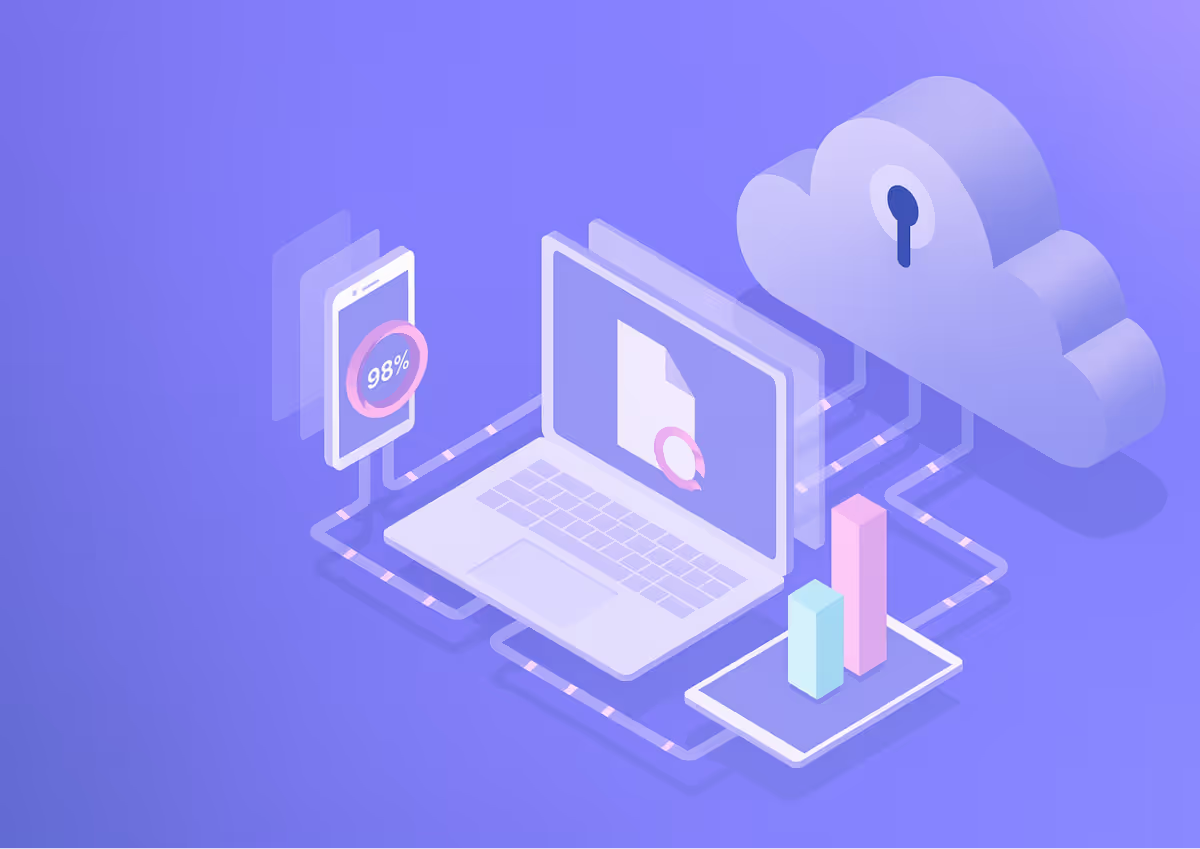
Choosing the right accounting software isn't as simple as it used to be. Cloud-based or desktop? Both have their strengths, and the right answer really depends on how your business works, who needs access, and what you're willing to spend.
In this article
If you're running a business and managing your finances, at some point you'll face the same question everyone does: do I go cloud-based or stick with desktop accounting software?
It sounds like a simple choice, but the decision has a real impact on how your team works day to day: who can access your data, how secure it is, how easily you can collaborate, and what you'll end up paying in the long run.
In this article, we walk you through the key differences so you can stop guessing and pick the option that actually fits how your business operates.
But first of all, what does the "cloud desktop" mean?
The term "cloud desktop" has given the virtual desktop environment a name. It is very supportive of remote servers through the Internet.
Unlike traditional desktop applications and locally installed and managed computer desktop systems, cloud desktop allows users to log in and access their desktops from anywhere with an Internet connection.
Such flexibility and availability would be pretty tempting for people seeking modern solutions for their accounting needs, especially for people in business.
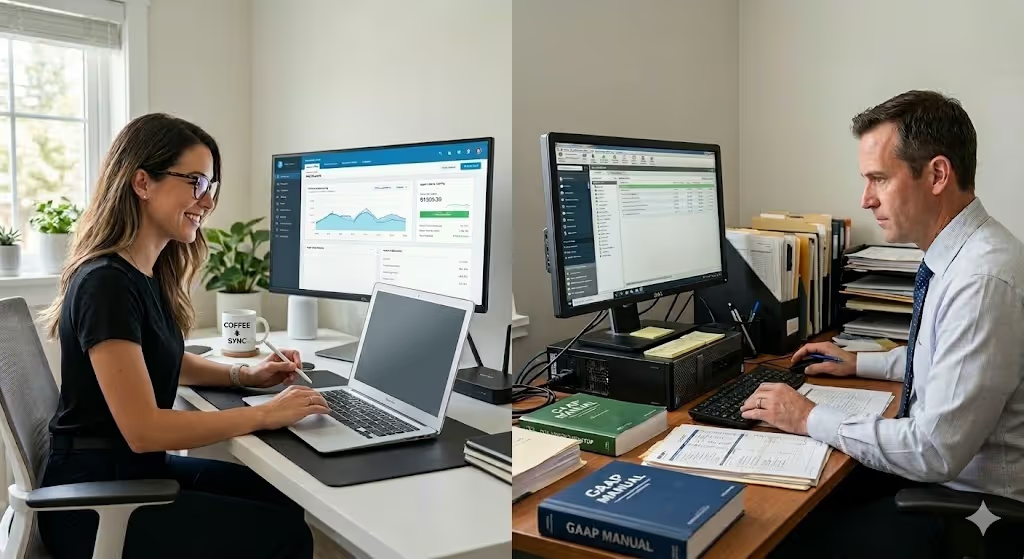
Cloud-based accounting software is becoming more popular among businesses—small, medium, or large—because it has several advantages. Some key merits of this software are:
Some of the main drawbacks associated with the use of cloud-based accounting software include:
Desktop bookkeeping software works the old-fashioned way: it's installed on your computer and runs entirely from your local device.
There's no cloud, no remote server, and no internet dependency. Your data stays on your machine, which gives you a strong sense of control and ownership.
The trade-off is that you can only access it from the device where the software is installed, which can become a limitation as your team grows or your work becomes more flexible.
The desktop accounting software is run from the individual hard local drive of the computer. This kind of software does not require the internet for it to run. Some of the significant benefits that businesses can gain from desktop accounting software include the following:
However, desktop accounting software also has its limitations, including:
Both desktop and cloud accounting software will get the core job done.
You can record transactions, manage your receivables and payables, and pull financial reports with either option.
The question is what happens beyond that.
How easily can your team access the data, can you collaborate in real time, and how well does it connect with the other tools your business runs on? That's where the two start to diverge.
✔️ Offline access: Desktop software works without an internet connection, so your team can keep working even when connectivity is unreliable or unavailable.
✔️ High customization: Desktop solutions typically offer more flexibility to configure the software around your specific workflows and business requirements.
✔️ Full data control: Your financial data stays on your own machine. No third-party servers, no cloud storage — you decide how it's stored and who can access it.
✔️ Access from anywhere: As long as you have an internet connection, you can log in and access your financial data from any device, whether you're in the office, at home, or traveling.
✔️ Real-time collaboration: Multiple team members can view and edit financial data at the same time, making it much easier to work across teams or locations.
✔️ Seamless integrations: Cloud accounting tools connect easily with other business software, giving you a joined-up view of your finances alongside the rest of your operations.
Let's talk money.
Whether you're a small business watching every expense or a larger company planning a long-term software investment, the cost difference between cloud and desktop accounting is worth understanding before you commit to either.
Cloud software runs on a subscription model, meaning you pay a recurring monthly or annual fee.
The price typically scales with the number of users or the features you need, so it can grow alongside your business.
Just keep in mind that add-ons like premium support or onboarding training can push the total cost higher than the base price suggests. It's worth reading the fine print before you sign up.
Desktop software usually requires a one-off upfront payment for a software license.
On the surface, this can feel more affordable than committing to a monthly subscription. However, the full cost picture is a bit more complex.
You'll need to budget for software updates, technical support, and any hardware upgrades needed to keep the software running smoothly over time. These costs don't always get factored in at the start, but they add up.
So, to clearly explain the pragmatic implications of the trade-off between cloud-based and desktop accounting software, a few instances are discussed below where businesses have derived benefits by applying Eleven accounting efficiency software.
Small Business A, a boutique marketing agency, struggled to manage its financial processes effectively using traditional desktop accounting software. The team also encountered challenges such as poor accessibility, manual data entry, and the failure to work jointly in remote areas on the financial tasks. Small Business A, seeking a more modern solution, transitioned to Eleven's cloud-based accounting software.
Small Business A realized several advantages by moving to cloud accounting:
Medium-sized Company B, a manufacturing company with multiple locations, relied on traditional desktop accounting software to manage its financial operations. However, as the company grew and expanded its operations, the limitations of desktop accounting became increasingly apparent. Company B looked into the cloud for some accounting solutions because there had been issues of scalability, accessibility, and data security.
After evaluating various cloud accounting options, Company B chose Eleven's cloud-based accounting software for its comprehensive features, scalability, and robust security measures. The transition to cloud accounting enabled Company B to:
Improved collaboration: For team members spread over different locations; real-time collaboration was greatly improved with the use of cloud accounting software, hence smooth communication and sharing of workings in finance activities.
Both options have genuine strengths, and neither is the wrong choice in the right context.
That said, the trend is clear : more businesses are moving to cloud accounting because it's flexible, scalable, and easier to manage as teams grow and change.
If you're still on the fence, start by asking yourself a few simple questions:
If you answered yes to most of those, the cloud is probably where you're headed.
Desktop accounting software is installed on your computer and stores data locally, meaning you can use it offline but can only access it from that specific device. Cloud accounting software runs online, so you can log in from anywhere, collaborate with your team in real time, and let the provider handle updates and security. In short, desktop gives you control, cloud gives you flexibility.
The safety of both cloud-based and desktop accounting systems varies depending on factors like implementing security measures. Cloud-based systems offer robust security features such as data encryption and regular backups the provider manages. Desktop systems rely on user-installed security measures like firewalls. Both can be secure with proper precautions.
Cloud-based accounting, accessed via the Internet, enables instant collaboration and smooth integration with other software platforms.
Traditional accounting software, installed on individual computers, limits accessibility and requires manual updates.
This cloud-based accounting is often preferable for small businesses since they can access it from any device, it's scalable, and it's cost-effective. It enables remote collaboration, provides real-time data access, and eliminates hardware maintenance. However, some may prefer the control of desktop systems.
Related content


We are using cookies. Learn more.

%20(1).avif)
.avif)


